London
Here is a 10 mile (16 km) walking route around London.
Route 1
You can start this part of the journey by taking the underground to London Bridge (Northern Line) or Tower Hill (Circle & District Lines).
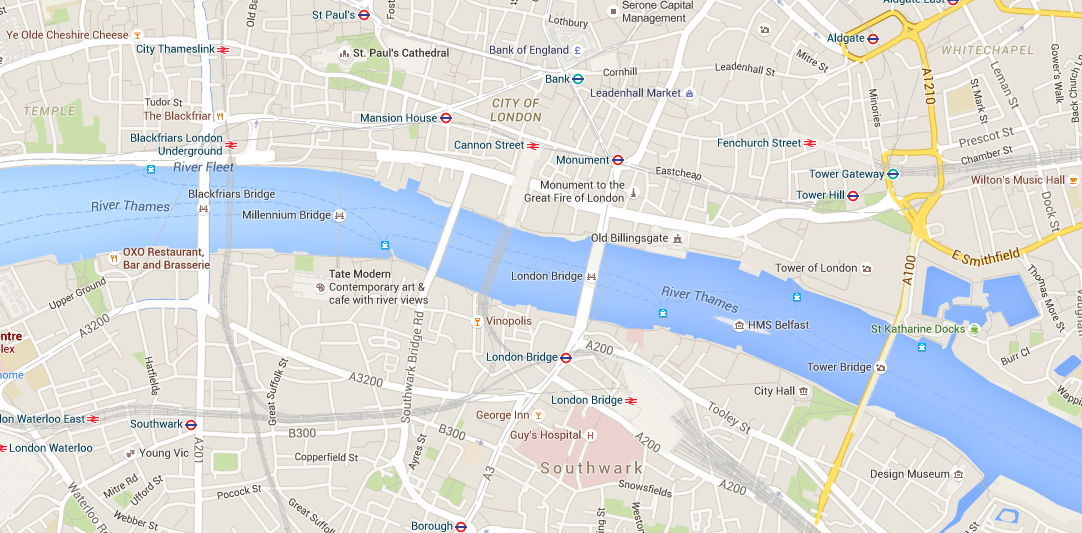 Tower of LondonTower BridgeCity HallHMS BelfastLondon BridgeGolden Hinde IIShakespeare's GlobeMillennium BridgeTate ModernViews from Tate ModernOxo Tower
1. Tower of London
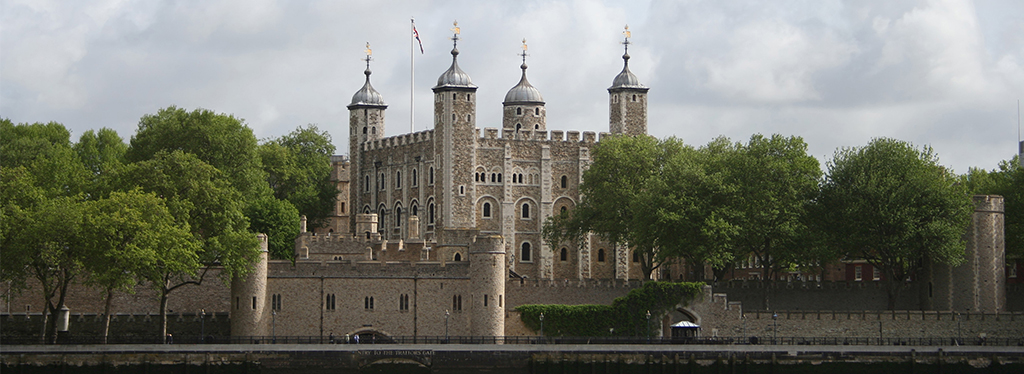
Tower of London was founded towards the end of 1066 as part of the Norman Conquest of England. The White Tower, which gives the entire castle its name, was built by William the Conqueror in 1078, and was a resented symbol of oppression, inflicted upon London by the new ruling elite. The castle was used as a prison from 1100 (Ranulf Flambard) until 1952 (Kray twins), although that was not its primary purpose. A grand palace early in its history, it served as a royal residence. Read more >
If you would like to go inside, you can buy tickets from http://www.hrp.org.uk/TowerOfLondon.
2. Tower Bridge
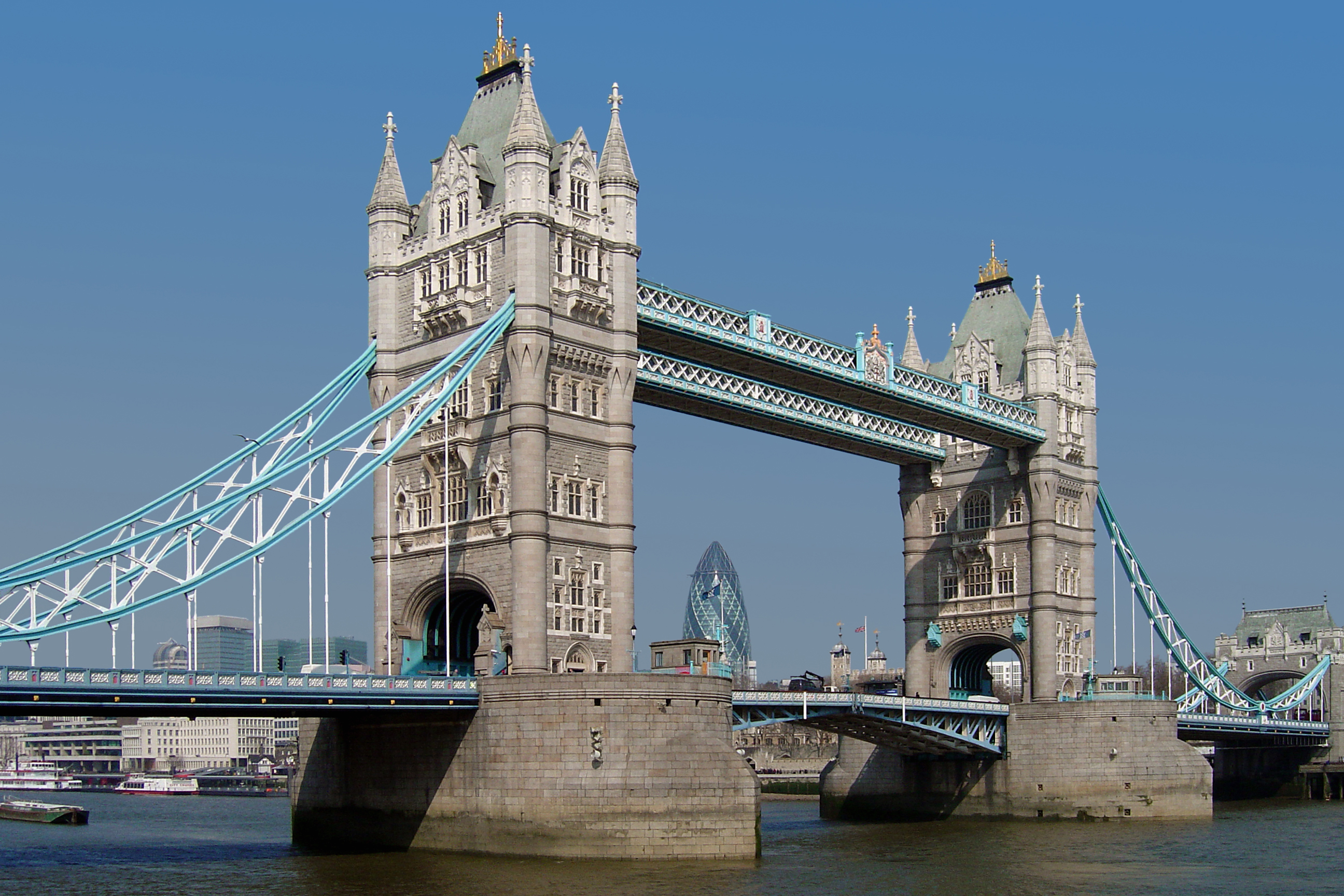
Arguably the most famous bridge in the world, Tower Bridge (built 1886–1894) crosses the River Thames close to the Tower of London. It has become an iconic symbol of London. Tower Bridge is often mistaken for London Bridge, the next bridge upstream. A popular urban legend is that in 1968, Robert P. McCulloch, the purchaser of the old London Bridge that was later shipped to Lake Havasu City in Arizona, believed that he was in fact buying Tower Bridge. :) Read more >
To get access to the exhibition area inside the bridge visit http://www.towerbridge.org.uk.
3. City Hall
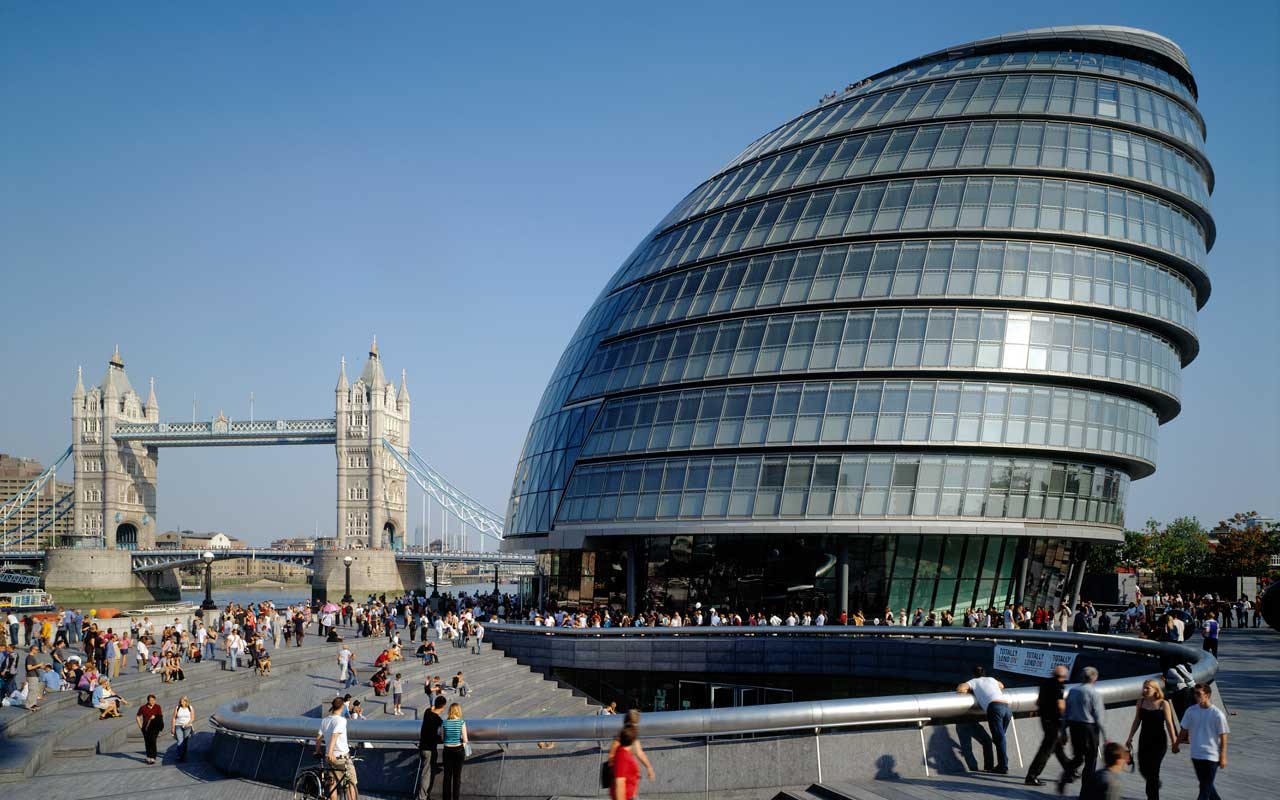
City Hall is the headquarters of the Greater London Authority (GLA), which comprises the Mayor of London and the London Assembly. The building has an unusual, bulbous shape, purportedly intended to reduce its surface area and thus improve energy efficiency, although the excess energy consumption caused by the exclusive use of glass (in a double facade) overwhelms the benefit of shape. Read more >
To find out more about the City Hall visit https://www.london.gov.uk/city-hall.
4. HMS Belfast
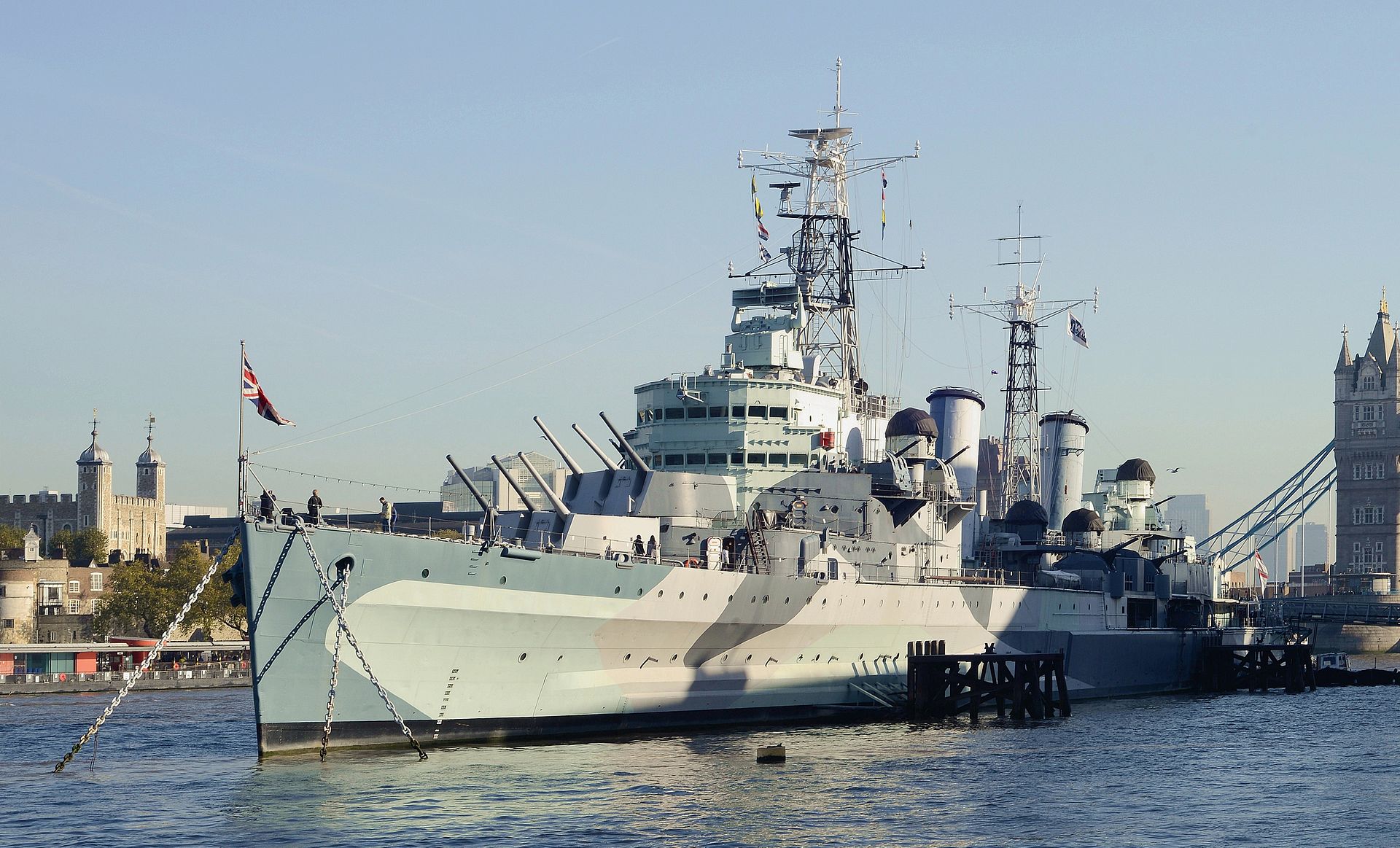
HMS Belfast is a museum ship, originally a Royal Navy light cruiser. She is permanently moored in London on the River Thames. Commissioned in early August 1939 shortly before the outbreak of the Second World War, Belfast was initially part of the British naval blockade against Germany. In November 1939 Belfast struck a German mine and spent more than two years undergoing extensive repairs. Belfast returned to action in November 1942 with improved firepower, radar equipment and armour. Read more >
You can get tickets to get on board the HMS Belfast at http://www.iwm.org.uk/visits/hms-belfast.
5. London Bridge
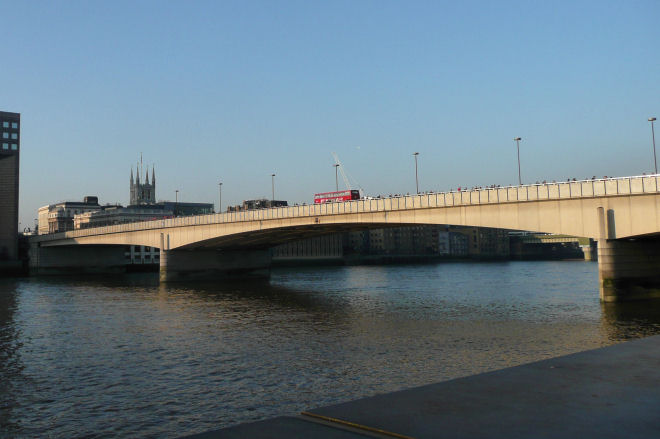
Several historical bridges named London Bridge have spanned the River Thames between the City of London and Southwark, in central London. The current crossing, which opened to traffic in 1974, is a box girder bridge built from concrete and steel. This replaced a 19th-century stone-arched bridge, which in turn superseded a 600-year-old medieval structure. This was preceded by a succession of timber bridges, the first built by the Roman founders of London. Read more >
6. Golden Hinde II
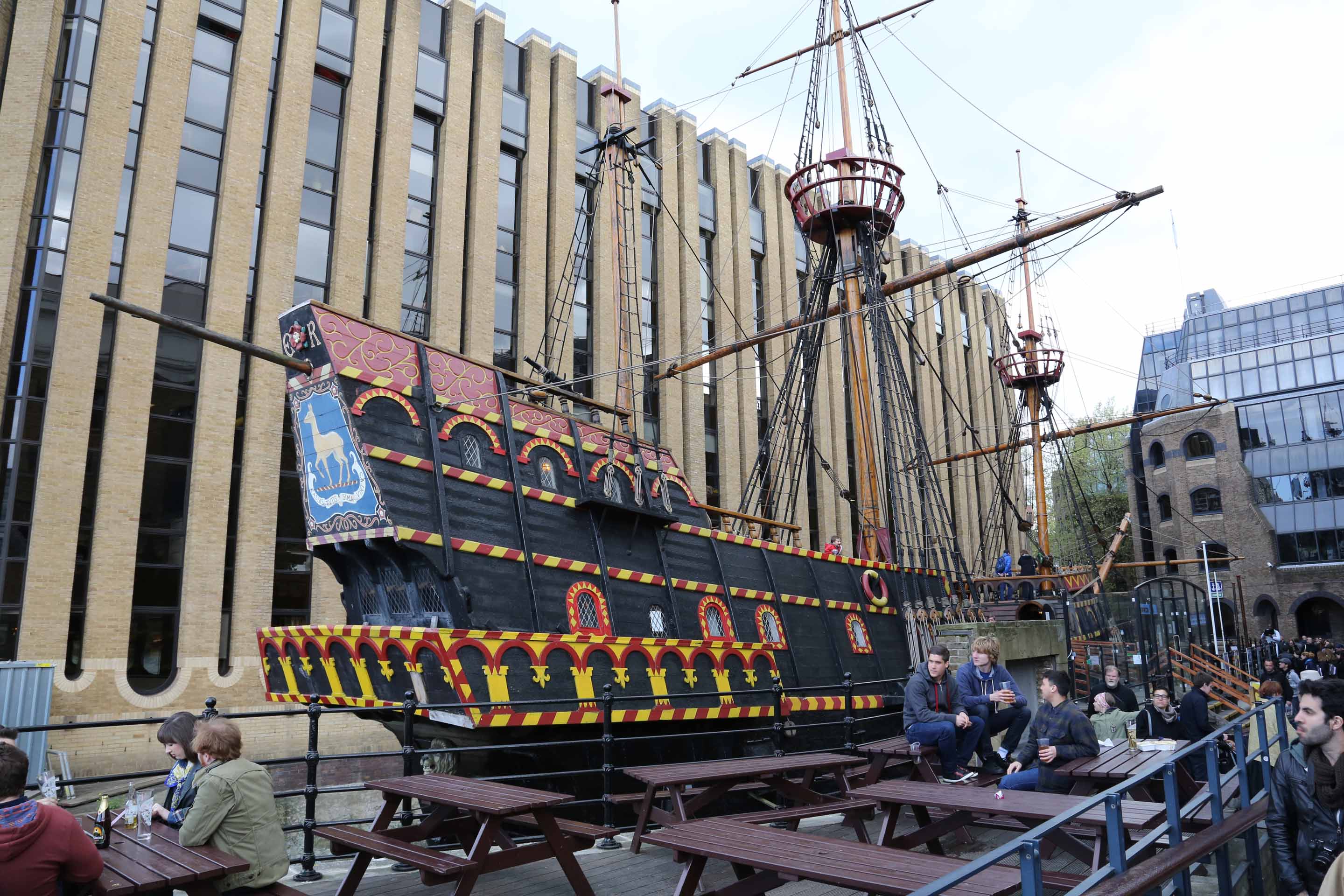
The Golden Hind was an English galleon best known for her circumnavigation of the globe between 1577 and 1580, captained by Sir Francis Drake. She was originally known as Pelican, but was renamed by Drake mid-voyage in 1578, in honour of his patron, Sir Christopher Hatton, whose crest was a golden 'hind' (a female deer). Hatton was one of the principal sponsors of Drake's world voyage. Read more >
Golden Hinde II is a full-sized reconstruction of the original ship. You can get tickets to get on board at http://www.goldenhinde.com.
7. Shakespeare's Globe
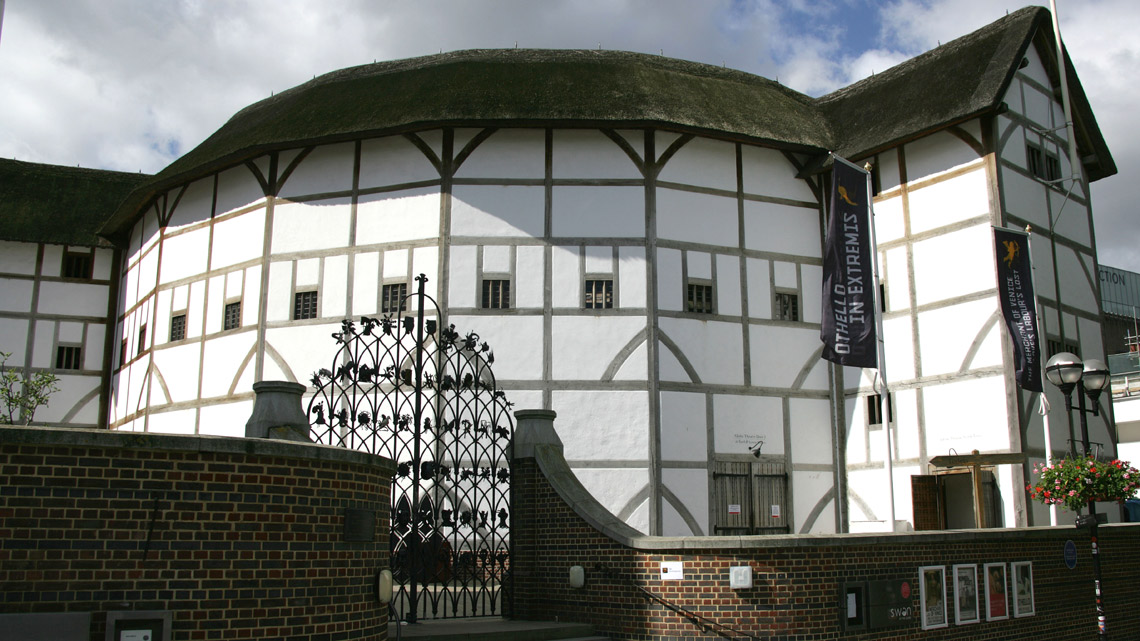
Shakespeare's Globe is a reconstruction of the Globe Theatre, an Elizabethan playhouse in the London Borough of Southwark, on the south bank of the River Thames that was originally built in 1599, destroyed by fire in 1613, rebuilt in 1614, and then demolished in 1644. The modern reconstruction is an academic approximation based on available evidence of the 1599 and 1614 buildings. Read more >
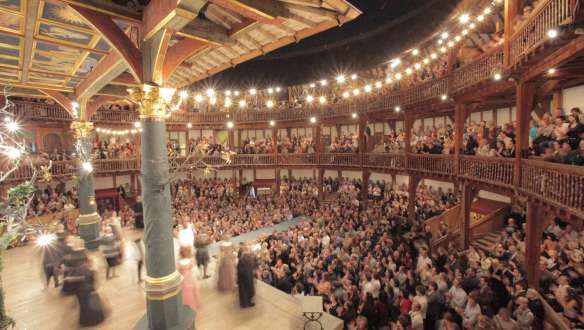
You can get tickets at http://www.shakespearesglobe.com.
8. Millennium Bridge
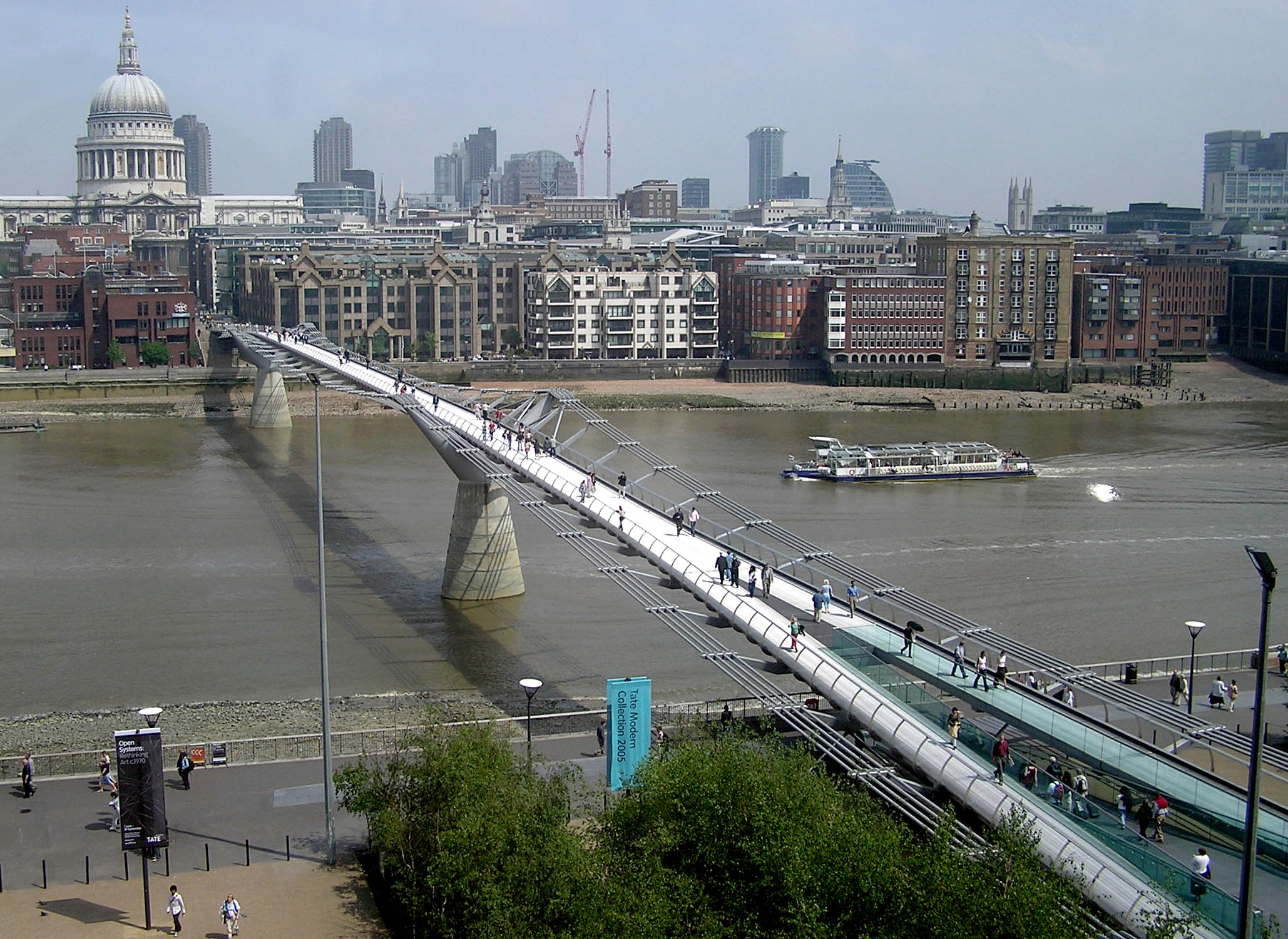
In 1996 Southwark Council organised a competition to build a bridge for pedestrians crossing the River Thames. The winning entry was an innovative "blade of light" effort. Due to height restrictions, and to improve the view, the bridge's suspension design had the supporting cables below the deck level, giving a very shallow profile. On the day of opening, the bridge was crossed by 90,000 people, with up to 2,000 on the bridge at any one time, who felt unexpected swaying motion which was caused by a 'positive feedback' phenomenon, known as synchronous lateral excitation. (The natural sway motion of people walking caused small sideways oscillations in the bridge, which in turn caused people on the bridge to sway in step, increasing the amplitude of the bridge oscillations and continually reinforcing the effect.) The bridge was closed later on opening day and, after two days of limited access, it was closed for almost two years while modifications were made to eliminate the motion. It reopened in 2002. Read more >
9. Tate Modern
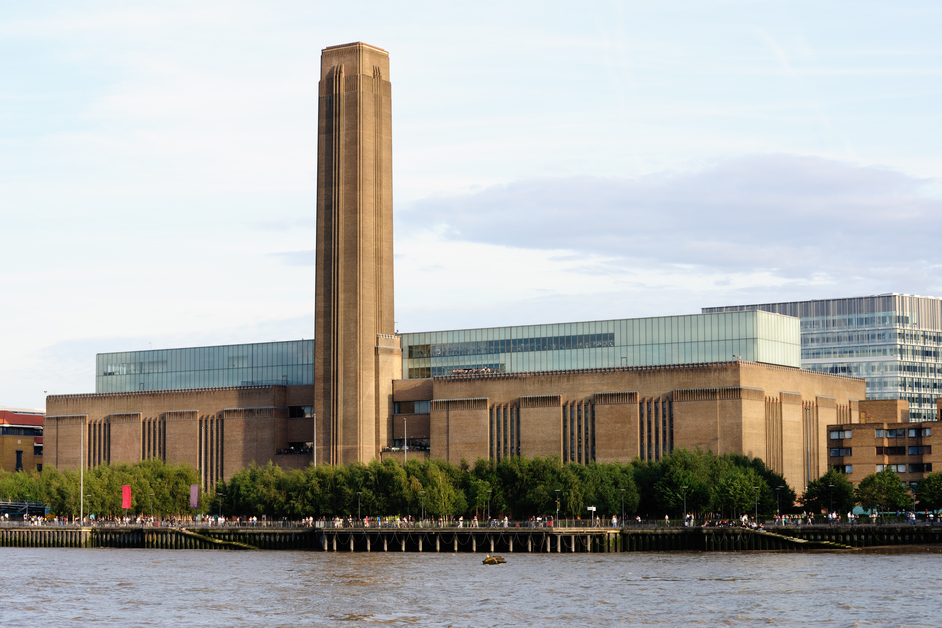
Tate Modern is a modern art gallery located in London. It is Britain's national gallery of international modern art and forms part of the Tate group (together with Tate Britain, Tate Liverpool, Tate St Ives and Tate Online). It is based in the former Bankside Power Station. Tate holds the national collection of British art from 1900 to the present day and international modern and contemporary art. Read more >
To find out about exhibitions see http://www.tate.org.uk/visit/tate-modern.
10. Views from Tate Modern
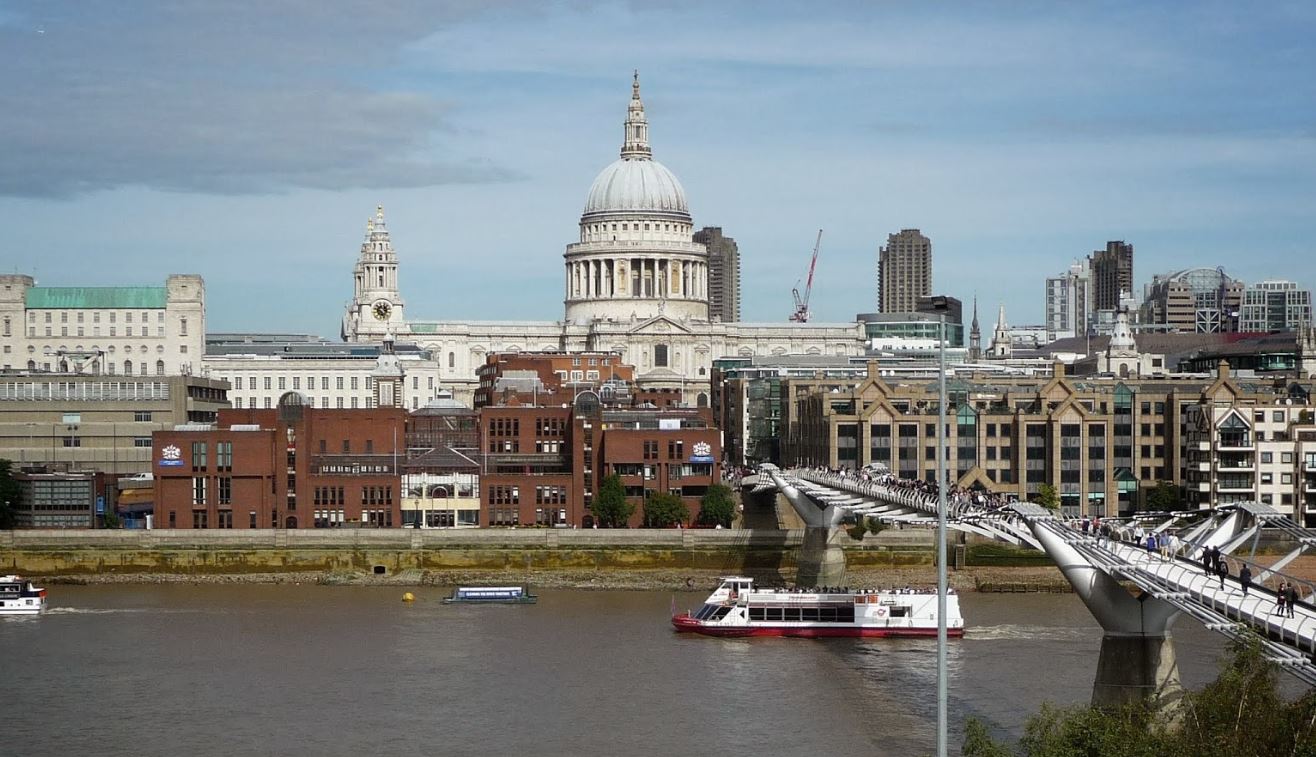
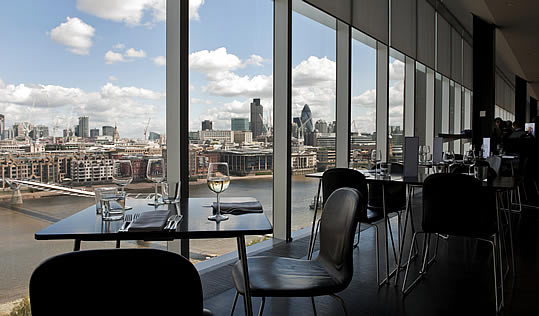
The cafe and restaurant at the 7th floor of Tate Modern boasts one of the best views in London.
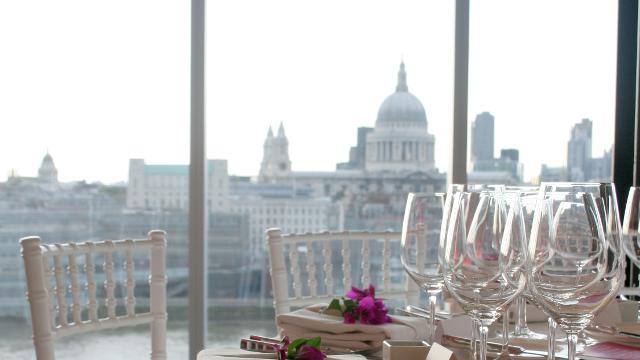
In this view is St Paul's Cathedral, which is one of the most famous and most recognisable sights of London. It sits on Ludgate Hill at the highest point of the City of London. At 365 feet (111 m) high, it was the tallest building in London from 1710 to 1962. The dome is among the highest in the world. St Paul's is the second largest church building in area in the United Kingdom after Liverpool Cathedral.
St Paul's Cathedral occupies a significant place in the national identity. Services held at St Paul's have included the funerals of Lord Nelson, the Duke of Wellington and Sir Winston Churchill; Jubilee celebrations for Queen Victoria; peace services marking the end of the First and Second World Wars; the wedding of Charles, Prince of Wales and Lady Diana Spencer, the launch of the Festival of Britain and the thanksgiving services for the Golden Jubilee, the 80th Birthday and the Diamond Jubilee of Elizabeth II. Read more >
If you would like to visit St Paul's Cathedral, see https://www.stpauls.co.uk.
11. Oxo Tower
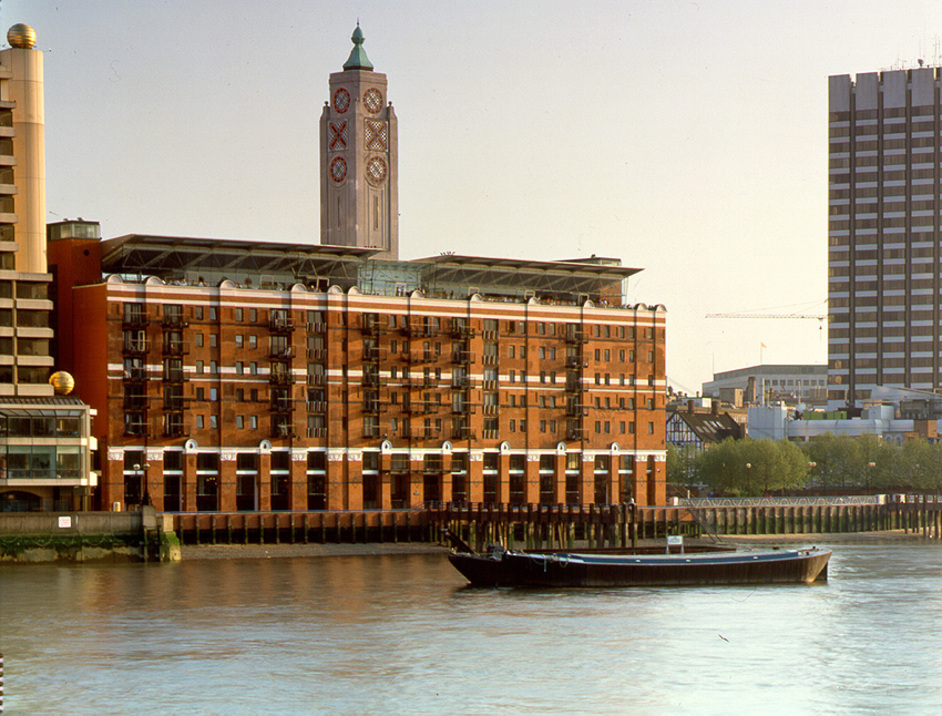
The Oxo Tower is a building with a prominent tower on the south bank of the River Thames in London. The building has mixed use as Oxo Tower Wharf containing a set of design, arts and crafts shops on the ground and first floors with two galleries, Bargehouse and gallery@oxo. The OXO Tower Restaurant, Bar and Brasserie is on the eighth floor, which is the roof-top level with fine and casual dining. In addition to this, situated on the eighth floor is a viewing gallery open to the public. The third to seventh floors contain 78 flats owned by Redwood Housing (1995). Much of the second floor can be hired out for events and weddings. Read more >
Here is the 3D view from the restaurant:
Route 2
You can start this part of the journey by continuing to walk from the OXO Tower in the previous step or taking the underground to Embankment (Northern Line).
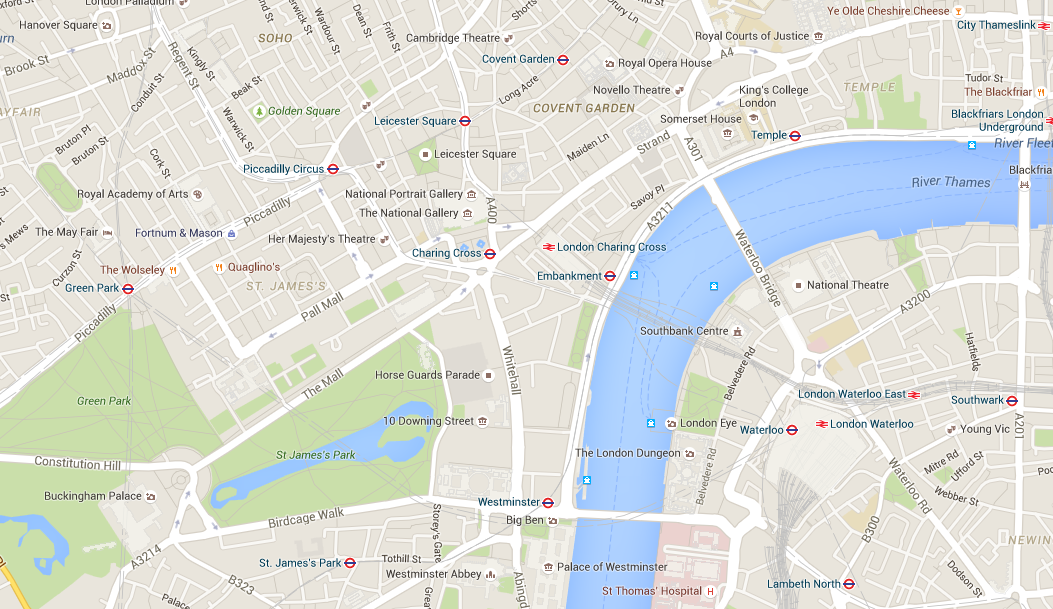 South BankNational TheatreRoyal Festival HallJubilee GardensLondon EyeLondon AquariumThe London DungeonWestminster BridgeBig BenWestminster AbbeyWhitehallBuckingham Palace
1. South Bank
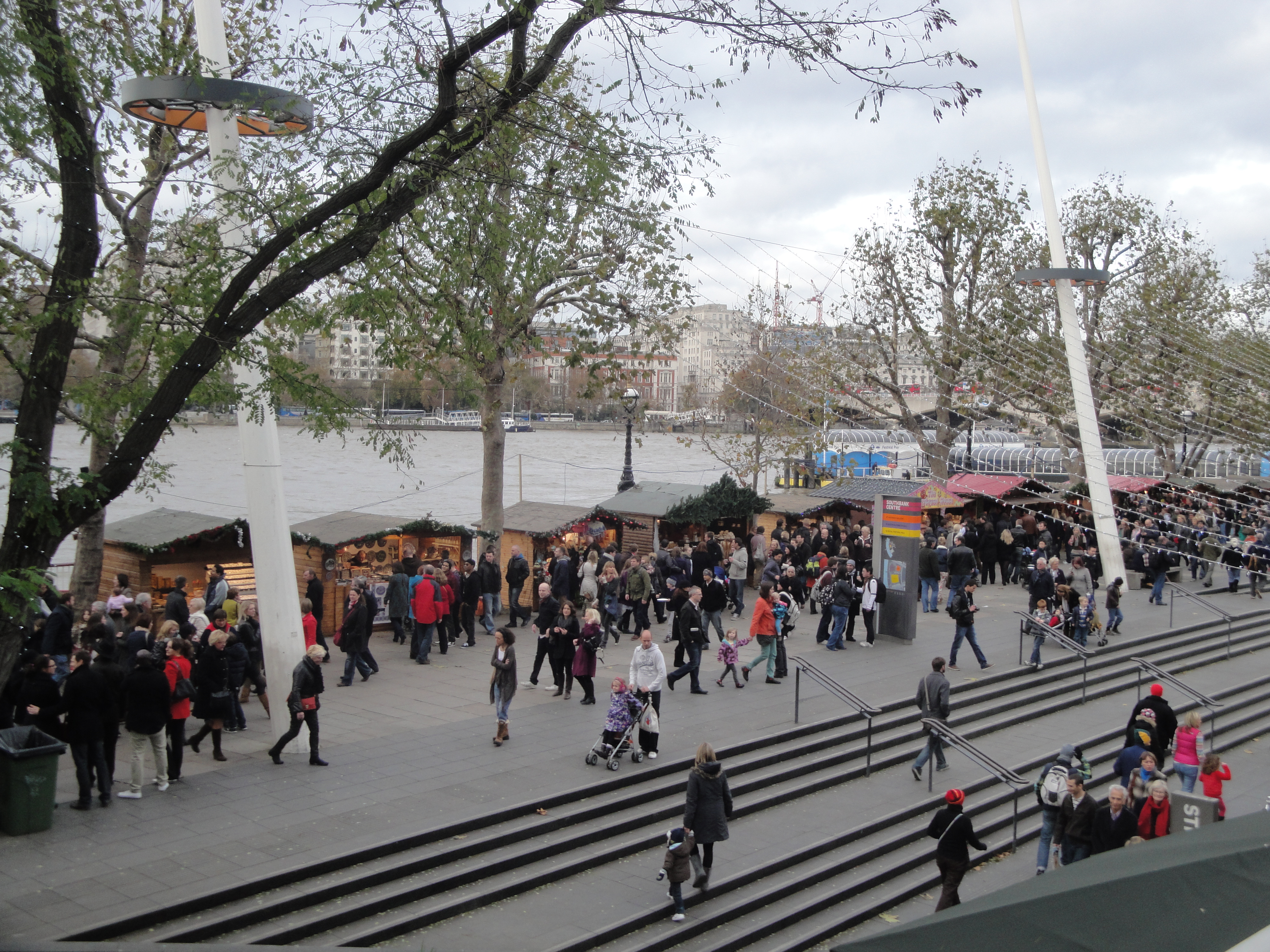
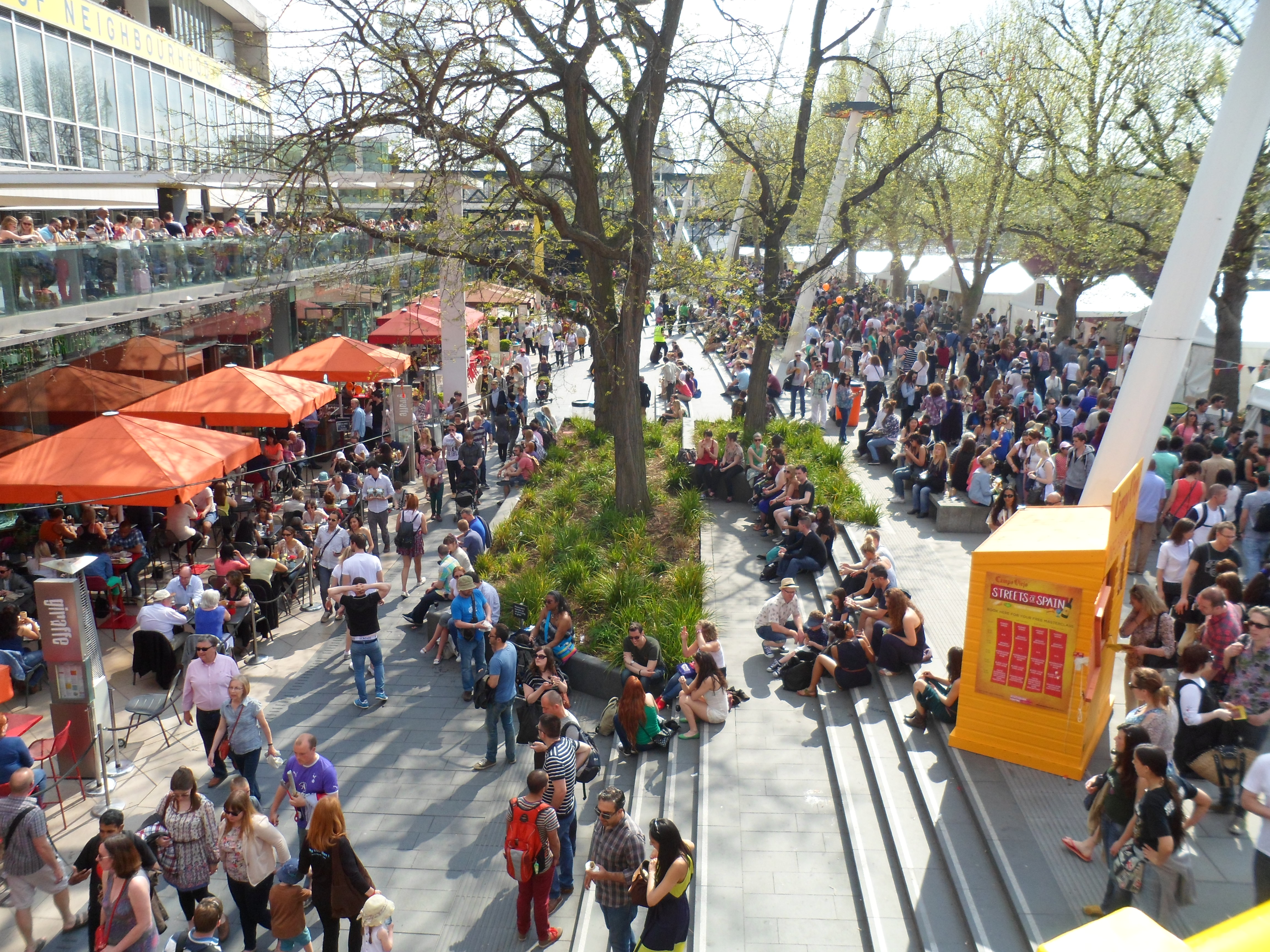
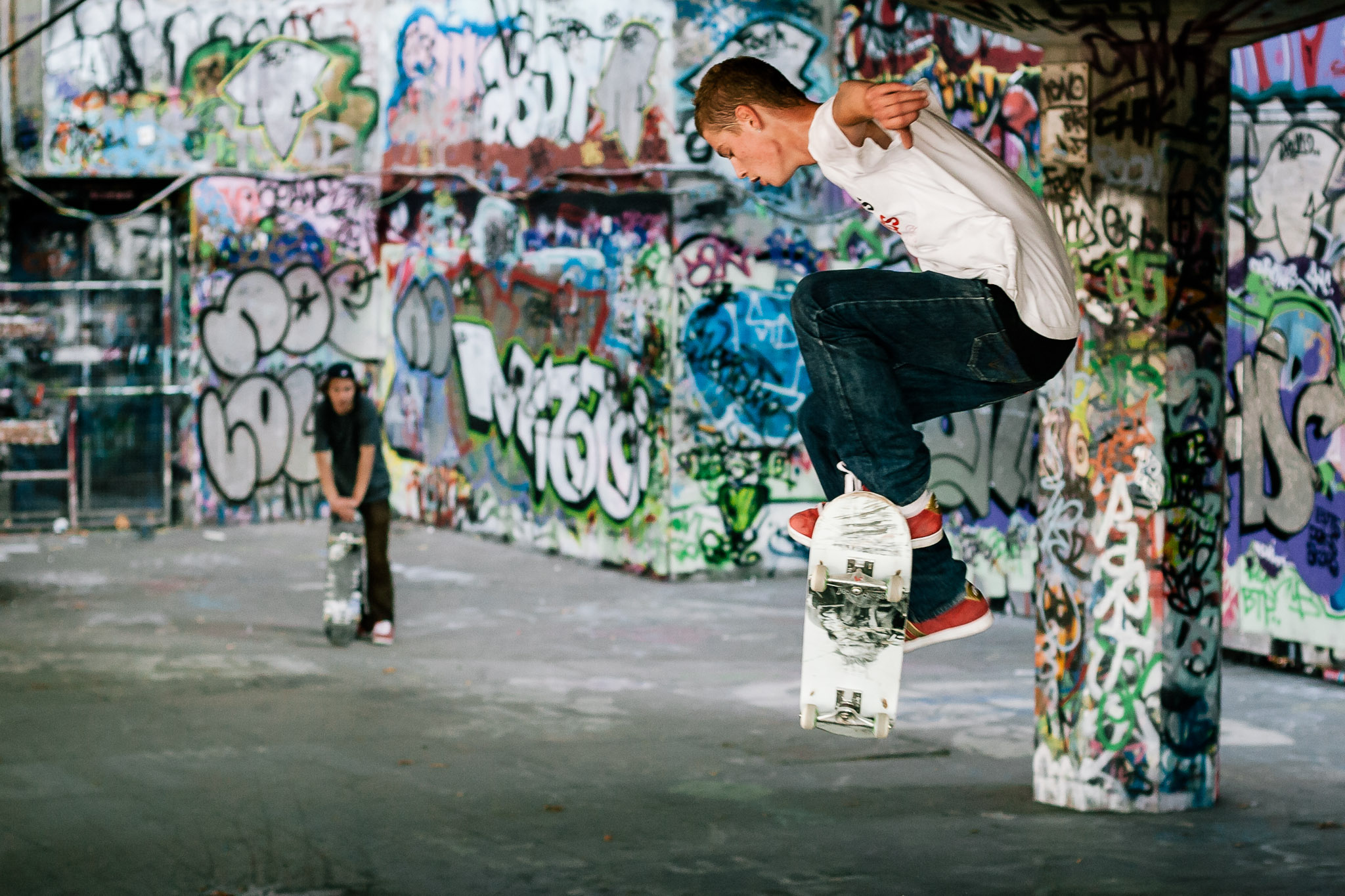
The South Bank is an entertainment and commercial district of Central London. During the Medieval period (5th-15th centuries) this area developed as a place of entertainment outside the formal regulation of the City of London on the north bank; this included theatres, prostitution and bear-baiting. By the 18th century the more genteel entertainment of the pleasure gardens had developed. The shallow bank and mud flats were ideal locations for industry and docks and went on to develop as an industrial location in a patchwork of private ownership. There was a shift in use when the London County Council required a new County Hall, which was built between 1917 and 1922 on the south bank. The construction of County Hall returned the first section of river frontage to public use. This was extended eastwards in 1951 when the Festival of Britain caused a considerable area to be redeveloped. It was renamed 'South Bank' as part of promoting the Festival. During the years following the festival the arts and entertainment complex grew with additional facilities, including the Queen Elizabeth Hall, and other arts venues opened along the river such as the Royal National Theatre. Read more >
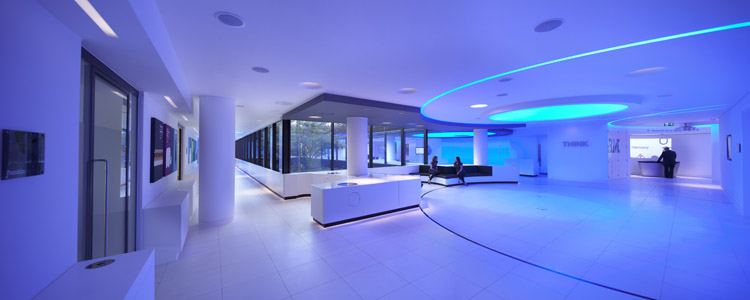
If you are a techie, you might want to know that the IBM has a building in the South Bank (inside shown below). See if you can find it...
2. National Theatre
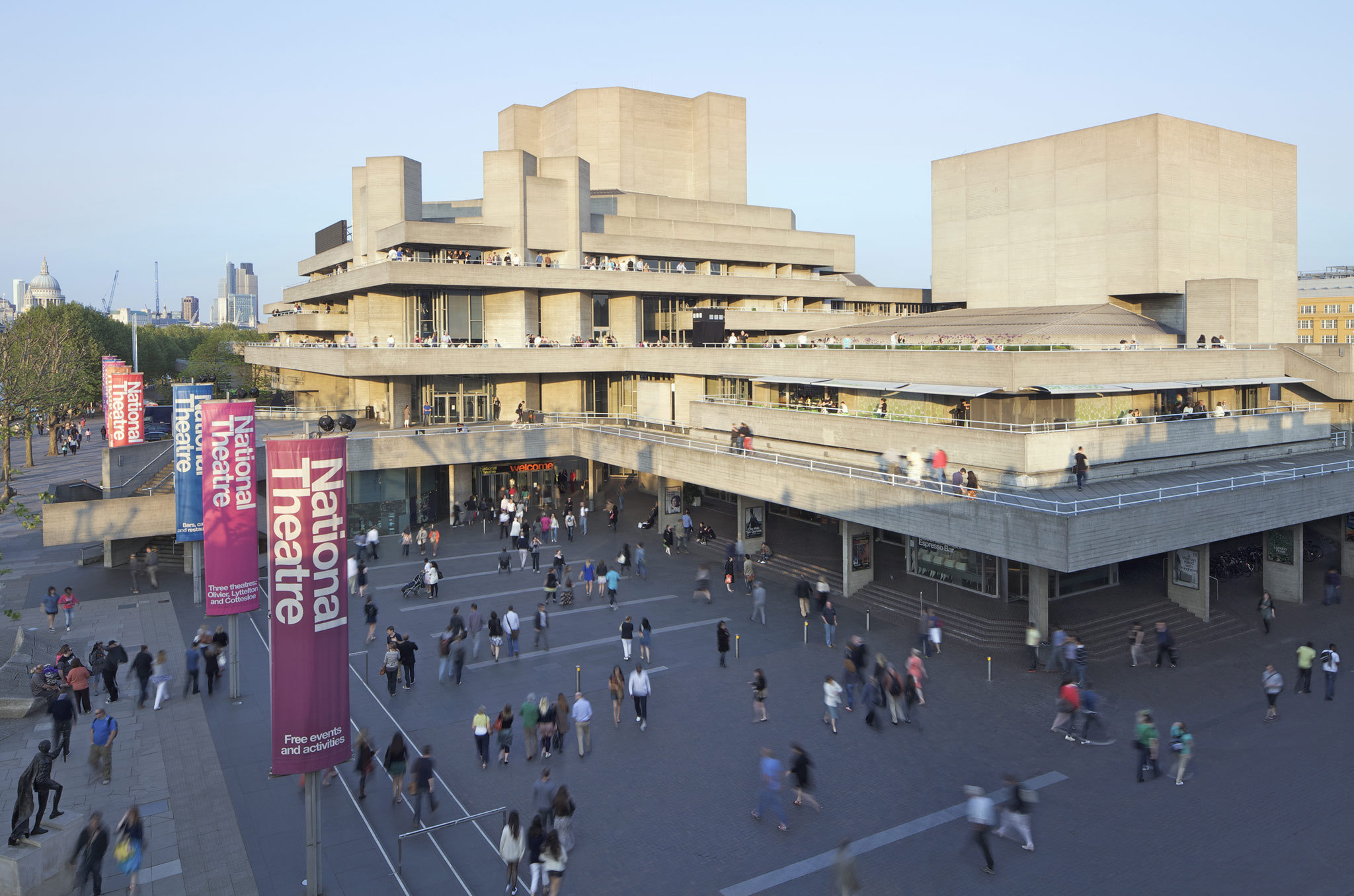
The Royal National Theatre (generally known as the National Theatre) is one of the UK's three most prominent publicly funded performing arts venues, alongside the Royal Shakespeare Company and the Royal Opera House. Read more >
You can buy tickets from http://www.nationaltheatre.org.uk.
3. Royal Festival Hall
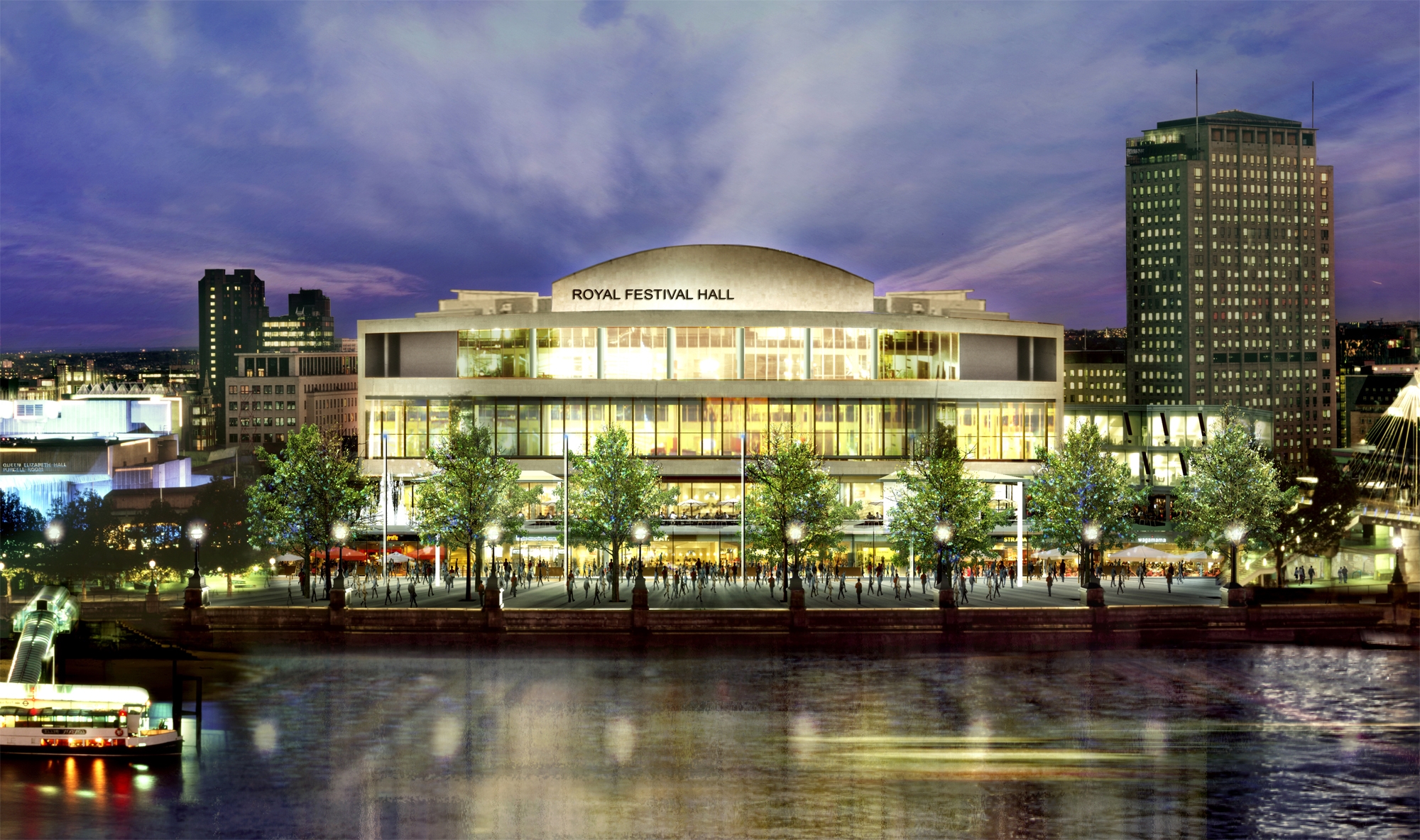
The Royal Festival Hall is a 2,500-seat concert, dance and talks venue within Southbank Centre. It is a Grade I listed building, the first post-war building to become so protected (in 1981). The London Philharmonic Orchestra, the Philharmonia Orchestra and the Orchestra of the Age of Enlightenment are resident in the hall. Read more >
There are many cafes and restaurants both in an out of the Southbank Centre.
You can see what's on and plan your visit on http://www.southbankcentre.co.uk/venues/royal-festival-hall.
4. Jubilee Gardens
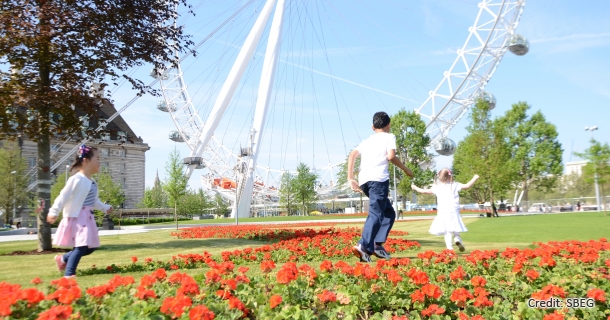
Jubilee Gardens is a public park on the South Bank. Created in 1977 to mark the Silver Jubilee of Elizabeth II, the site was formerly used for the Dome of Discovery and the adjacent Skylon during the Festival of Britain in 1951. A multimillion-pound redevelopment of the park was completed in May 2012, just before the Diamond Jubilee of Elizabeth II and the 2012 Summer Olympics, in order to transform it from a state of grassland to a mature looking park with trees and hills. Queen Elizabeth II reopened the gardens in October 2012. Read more >
For more information visit http://jubileegardens.org.uk.
5. London Eye
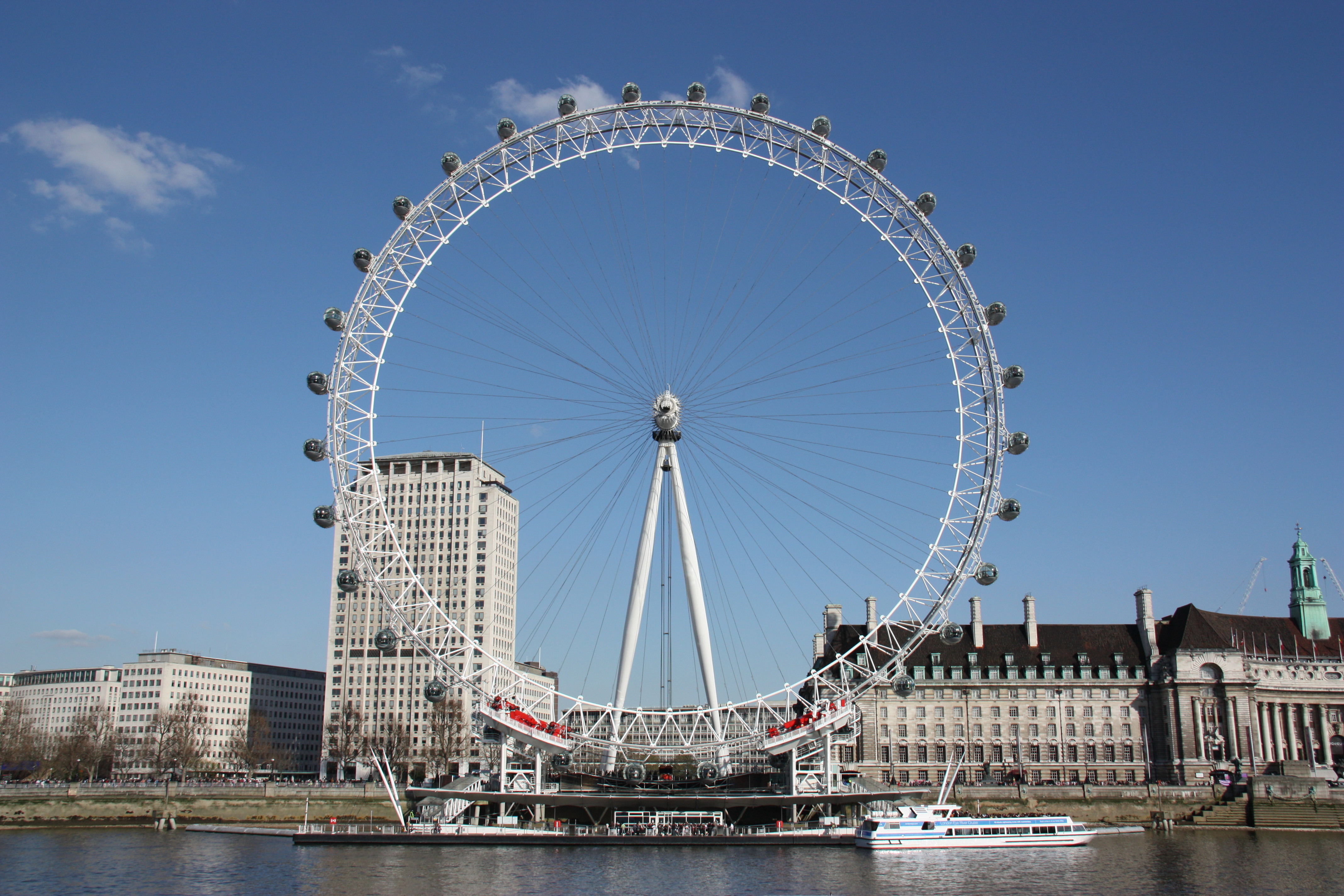
The London Eye is a giant Ferris wheel on the South Bank. At 135 metres (443 ft) it is currently Europe's tallest Ferris wheel, and offers one of the highest public viewing points in London. Read more >

You can buy tickets (and consider fast track tickets for peak times, as there may be long queues) at https://www.londoneye.com.
6. London Aquarium
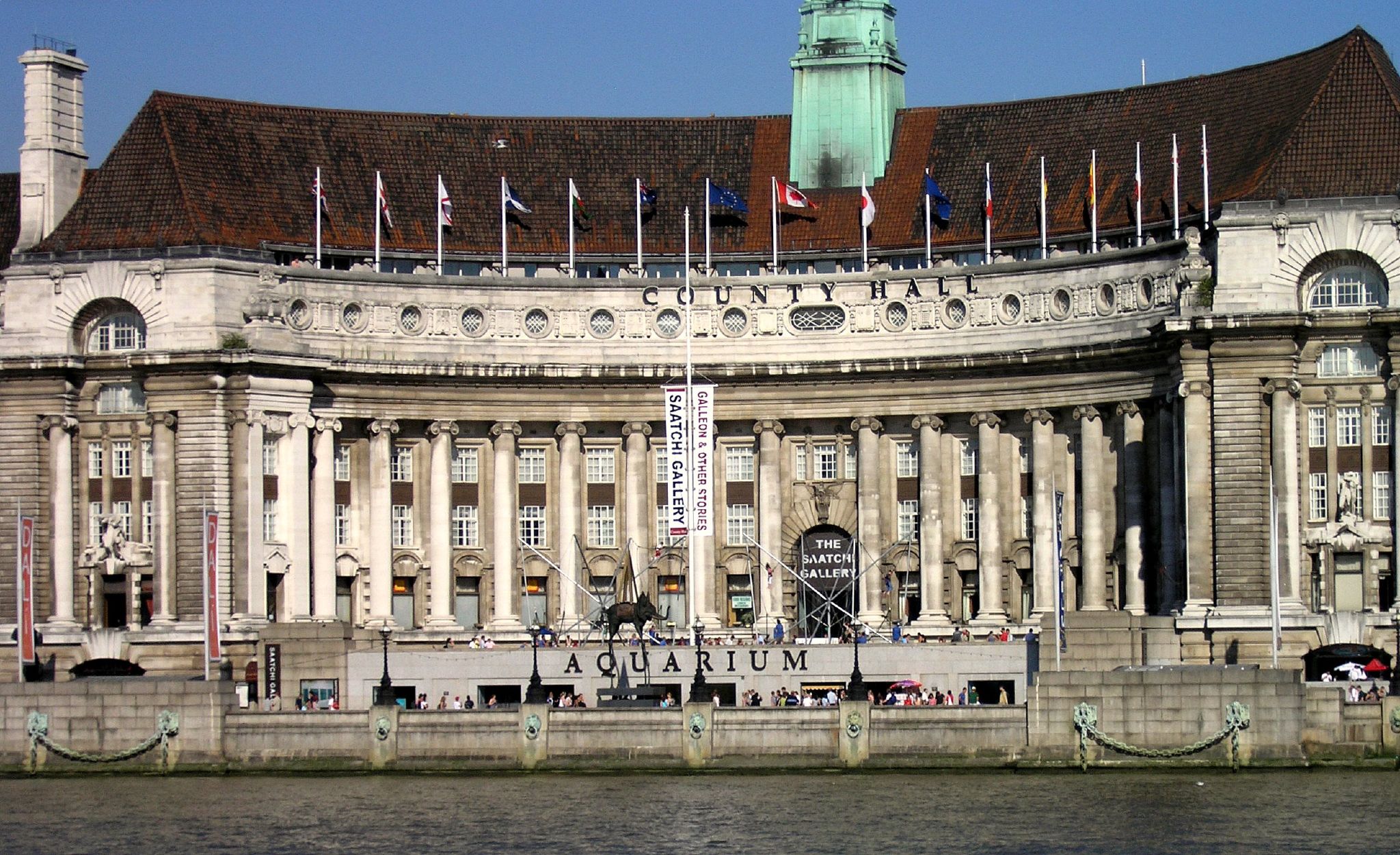
The Sea Life London Aquarium is located on the ground floor of County Hall on the South Bank. It opened in March 1997 as the London Aquarium and hosts about one million visitors each year. It is the largest aquarium in London.
You might remember this scene from Closer, featuring Julia Roberts and Clive Owen, which takes place in London Aquarium.
You can find out more and buy tickets from https://www2.visitsealife.com/london.
7. The London Dungeon
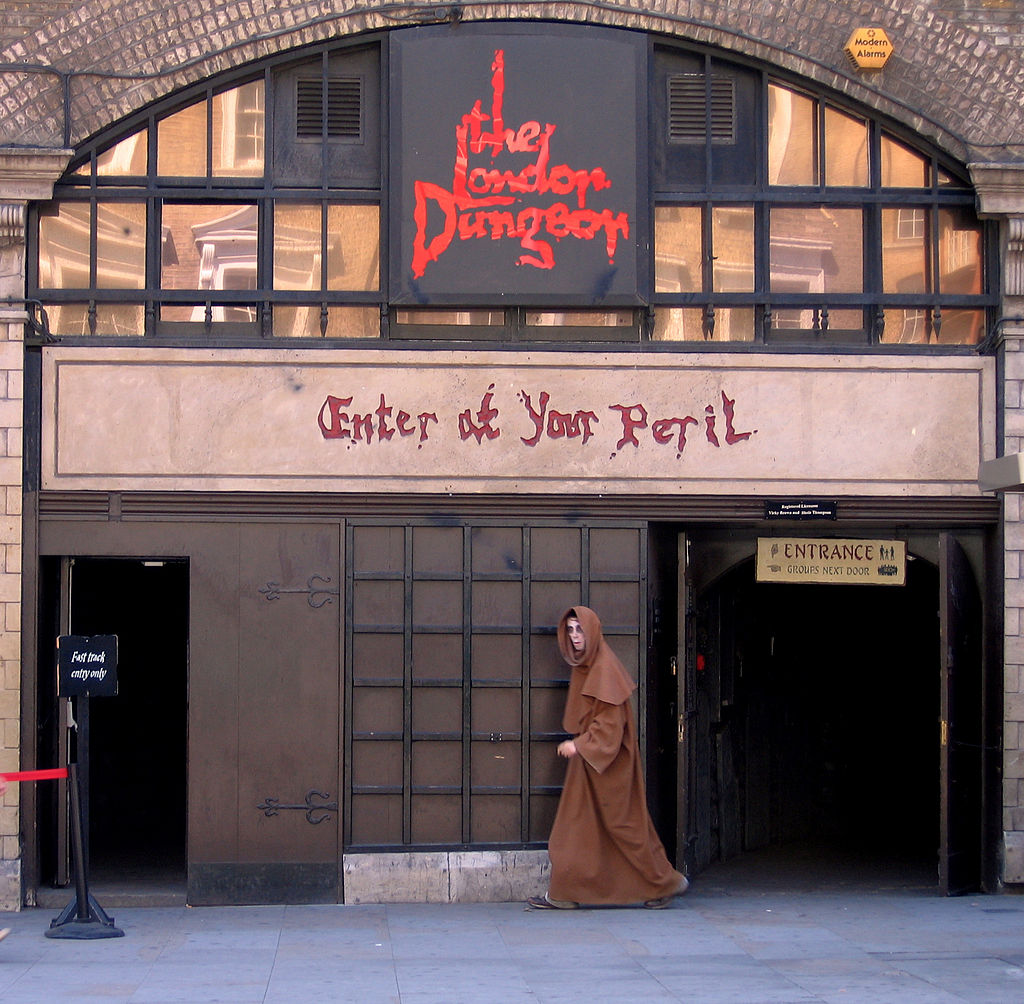 The London Dungeon is a tourist attraction, which recreates various gory and macabre historical events in a gallows humour style. It uses a mixture of live actors, special effects and rides.
You can plan your visit and buy tickets from http://www.thedungeons.com/london/en/.
8. Lambeth Bridge
Lambeth Bridge is a road traffic and footbridge crossing the River Thames in an east-west direction in central London, the river flows north at the crossing point. The most conspicuous colour in the bridge's paint scheme is red, the same colour as the leather benches in the House of Lords which is at the southern end of the Palace of Westminster nearest the bridge. This is in contrast to Westminster Bridge which is predominantly green, the same colour as the benches in the House of Commons at the northern end of the Houses of Parliament. Read more >
You can go under the bridge to take a picture of the Palace of Westminster.
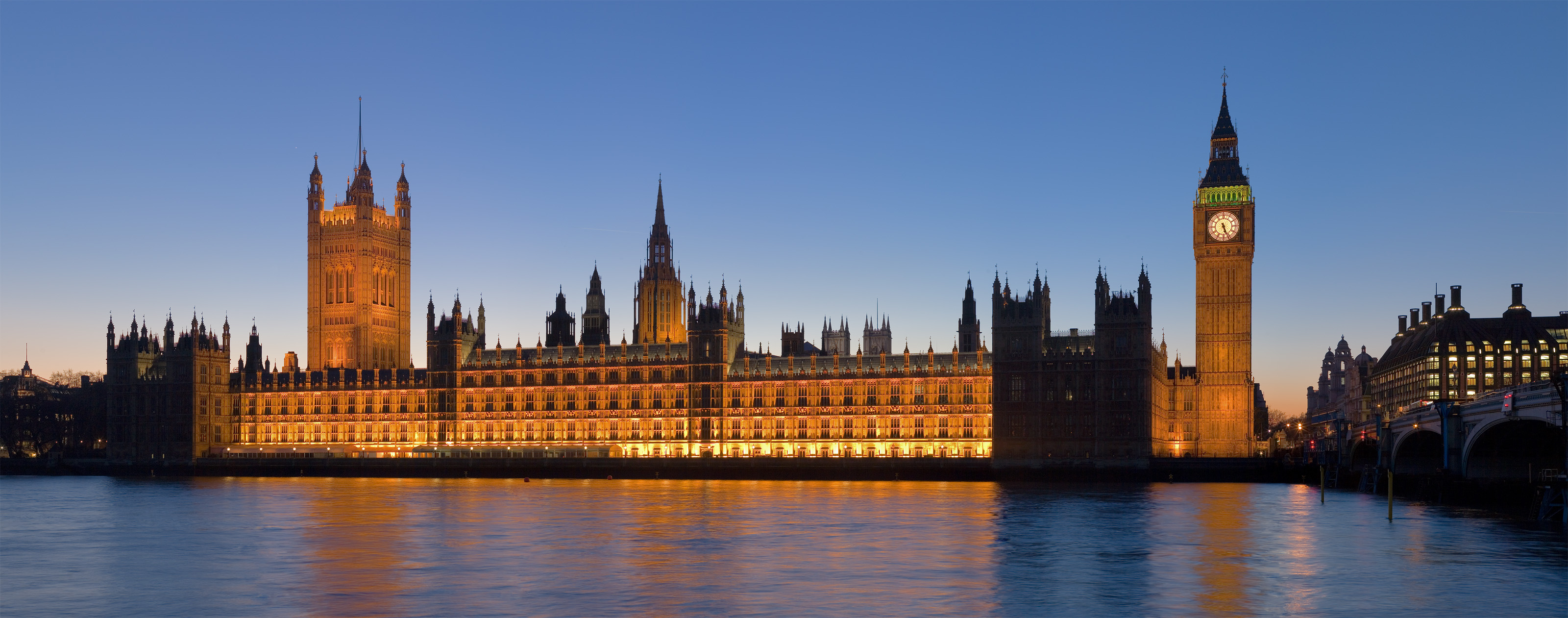
9. Big Ben
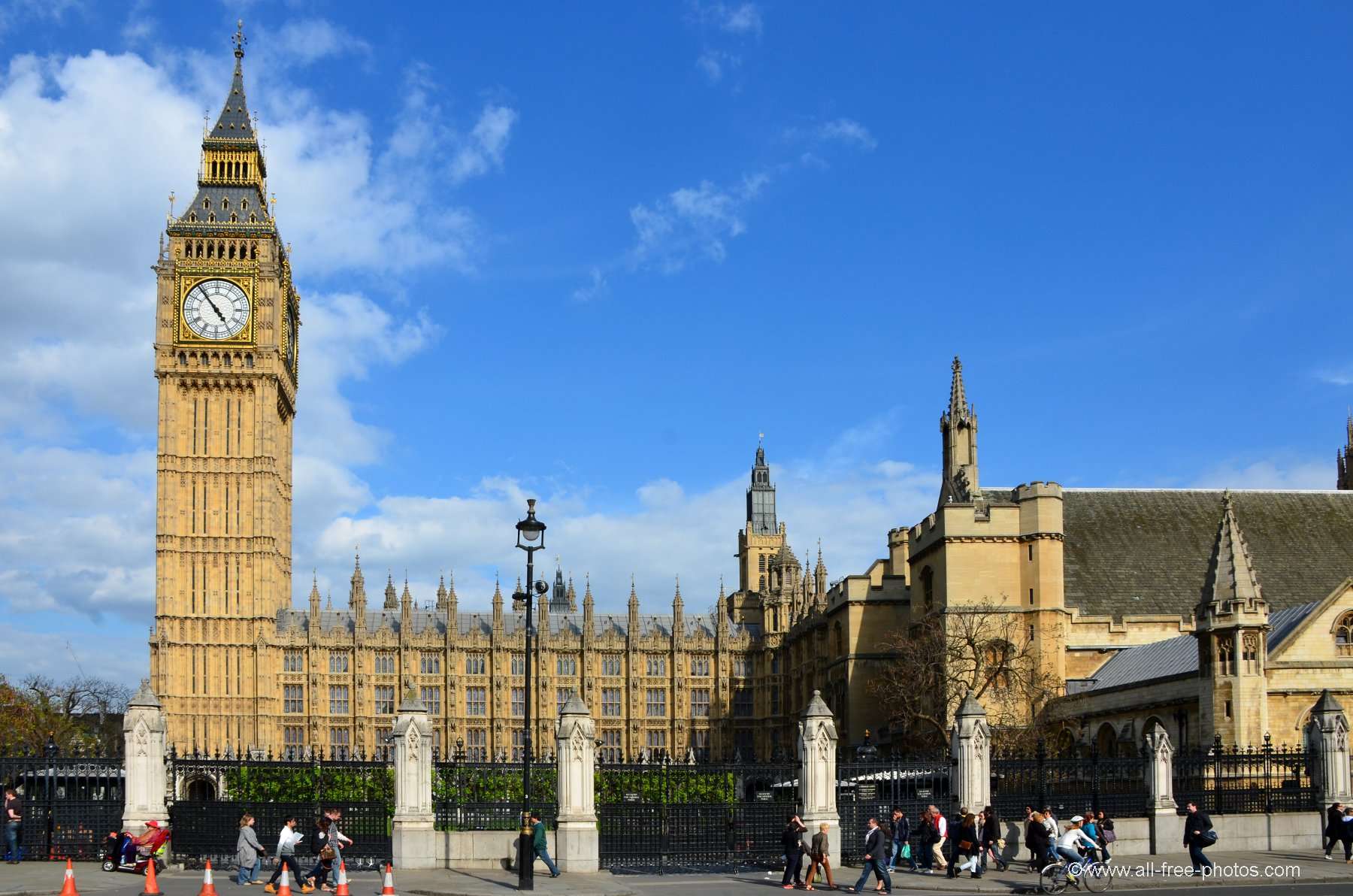
Big Ben is the nickname for the Great Bell of the clock at the north end of the Palace of Westminster, and often extended to refer to the clock and the clock tower. The tower is officially known as the Elizabeth Tower, renamed as such to celebrate the Diamond Jubilee of Elizabeth II (prior to being renamed in 2012 it was known simply as "Clock Tower"). The tower holds the second largest four-faced chiming clock in the world (Minneapolis City Hall having the largest). The tower was completed in 1858 and had its 150th anniversary on 31 May 2009, during which celebratory events took place. The tower has become one of the most prominent symbols of the United Kingdom and is often in the establishing shot of films set in London. Read more >
To arrange a tour of Big Ben and the Elizabeth Tower visit http://www.parliament.uk/bigben.
10. Westminster Abbey
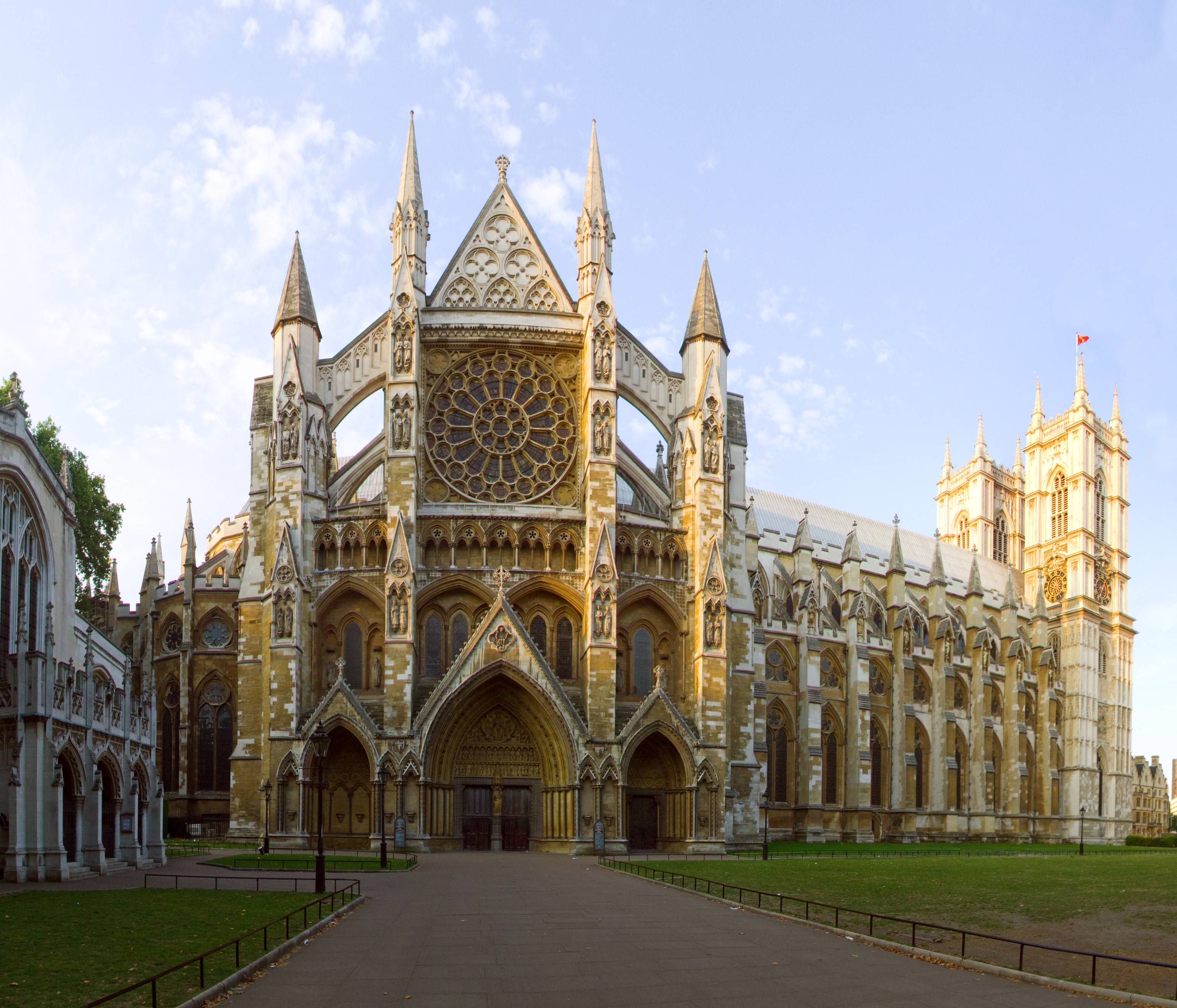
Westminster Abbey is a large, mainly Gothic abbey church that was founded in 960. It is one of the most notable religious buildings in the United Kingdom and has been the traditional place of coronation and burial site for English and, later, British monarchs. Since 1066, when Harold Godwinson and William the Conqueror were crowned, the coronations of English and British monarchs have been held here. There have been at least 16 royal weddings at the abbey since 1100. The last one was between Prince William and Kate Middleton. Read more >
You can find more information about the Abbey at http://www.westminster-abbey.org.
11. Whitehall
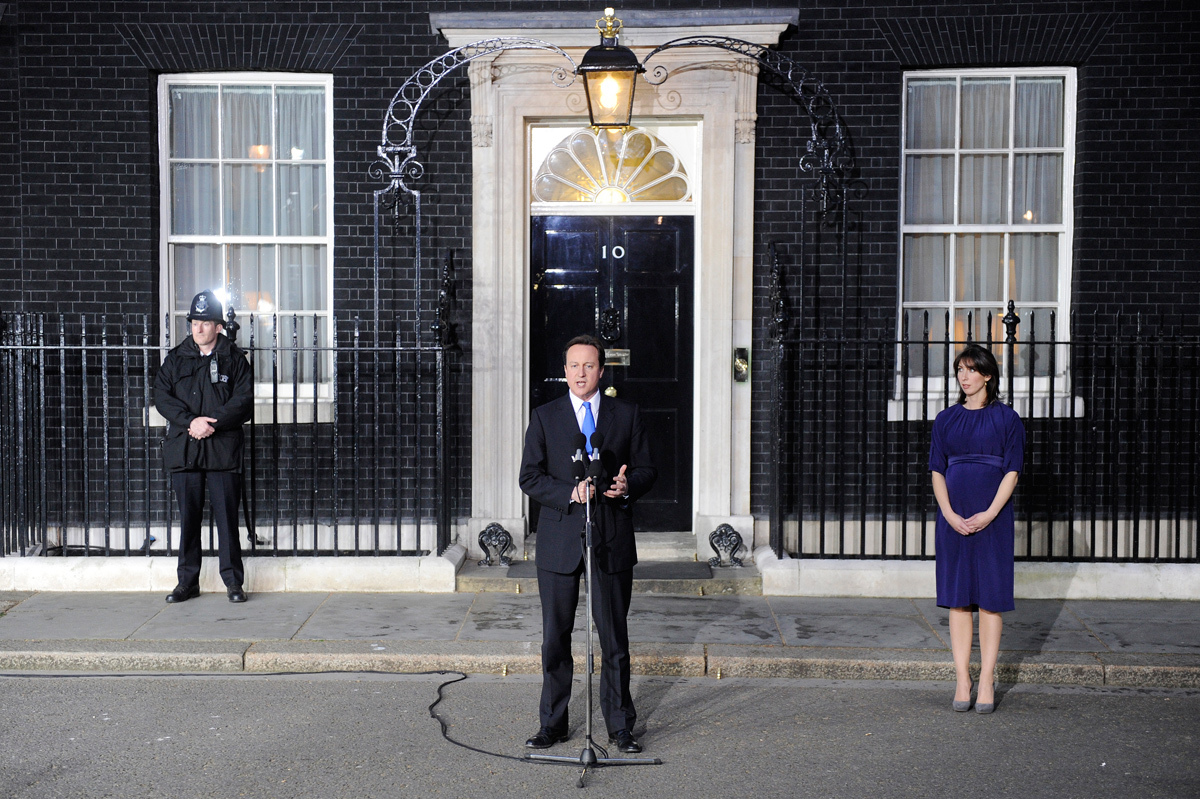
Whitehall is a road that is recognised as the centre of Her Majesty's Government. The street is lined with government departments and ministries; the name "Whitehall" is thus also frequently used as a metonym for British central governmental administration, as well as being a geographic name for the surrounding area. The central portion of the street is dominated by military buildings, including the Ministry of Defence, with the former headquarters of the British Army and Royal Navy, the Royal United Services Institute, the Horse Guards building and the Admiralty, on the opposite side. Downing Street leads off the south-west end of Whitehall, just above Parliament Street.
Note that the outside gates of Downing Street are often closed to the public, so you can't get a glimpse of the PM at his office. You can however catch the changing of the Horse Guards at 4pm every day. See http://changing-guard.com/queens-life-guard.html for more information.
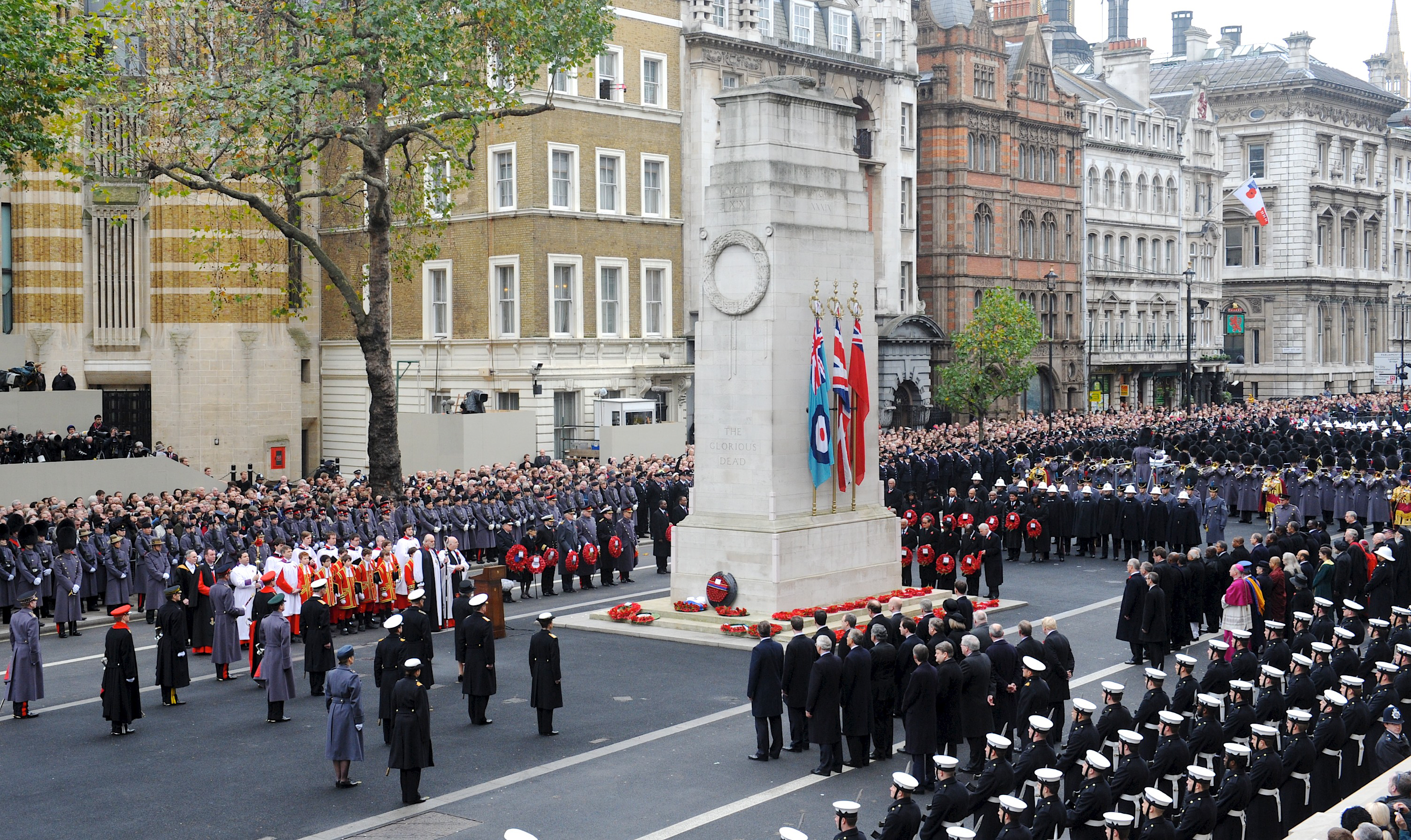
Whitehall is also widely known for a number of memorial statues and monuments, including Britain's primary war memorial, the Cenotaph.
Route 3
You can either walk from Westminster Abbey or Whitehall, or take the tube to the Green Park Station (on Piccadilly Line and Victoria Line) and walk through Green Park.
1. Buckingham Palace
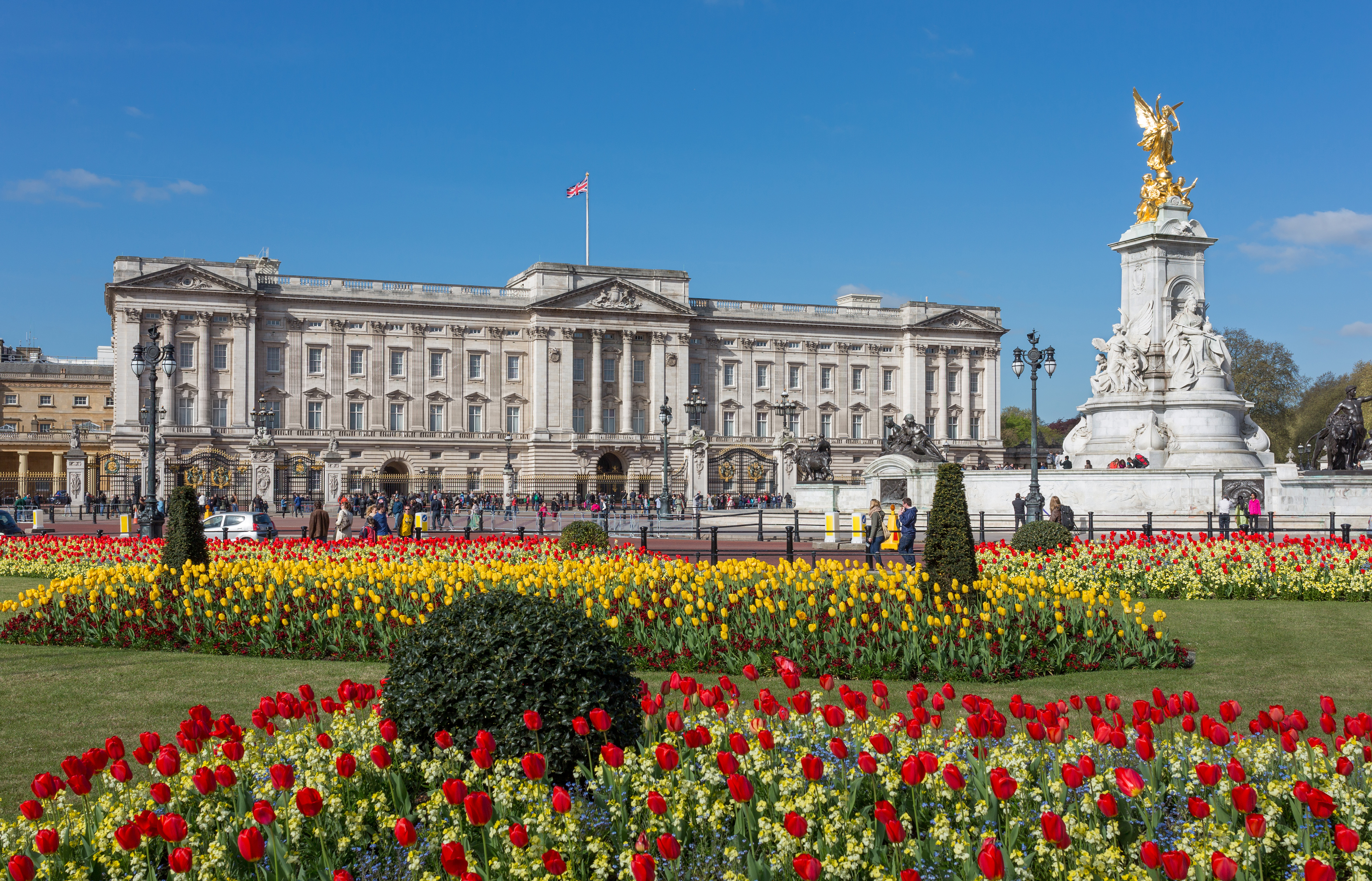
Yes, this is where Her Majesty The Queen lives. the building which forms the core of today's palace was a large townhouse built for the Duke of Buckingham in 1703 on a site which had been in private ownership for at least 150 years. It was subsequently acquired by King George III in 1761[4] as a private residence for Queen Charlotte and was known as "The Queen's House". During the 19th century it was enlarged, principally by architects John Nash and Edward Blore, who formed three wings around a central courtyard. Buckingham Palace finally became the official royal palace of the British monarch on the accession of Queen Victoria in 1837. The last major structural additions were made in the late 19th and early 20th centuries, including the East front, which contains the well-known balcony on which the royal family traditionally congregates to greet crowds outside. Read more >
Exclusive guided tours are available from https://www.royalcollection.org.uk/visit/the-state-rooms-buckingham-palace.
2. The Mall
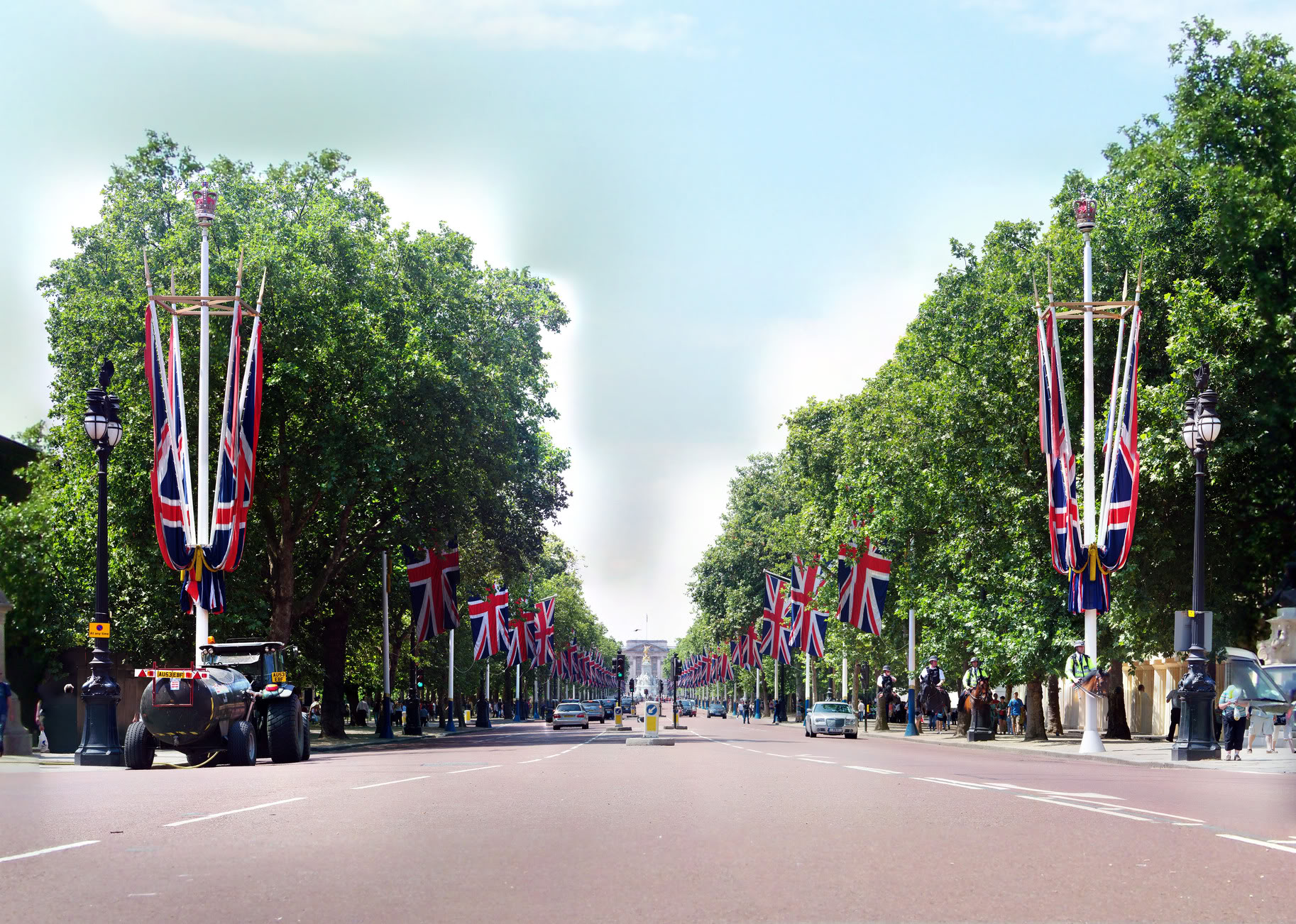
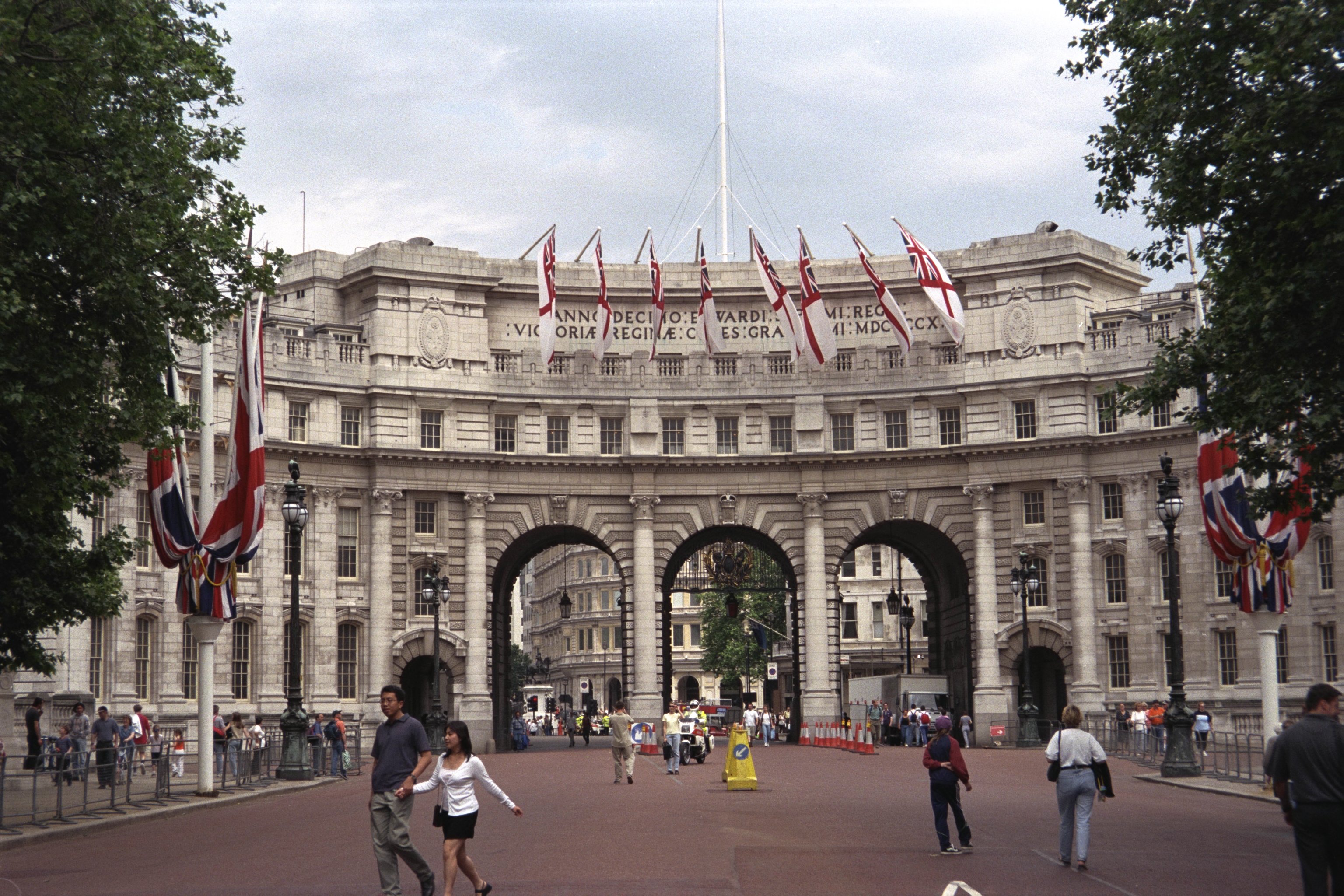
The Mall is a road that runs from Buckingham Palace at its western end to Admiralty Arch and on to Trafalgar Square at its eastern end. The Mall was envisioned as a ceremonial route in the early 20th century, matching the creation of similar ceremonial routes in other cities such as Berlin, Mexico City, Oslo, Paris, Saint Petersburg, Vienna and Washington, D.C. The surface of The Mall is coloured red to give the effect of a giant red carpet leading up to Buckingham Palace. It also features in various sporting events; for example, the annual London Marathon finishes on The Mall. Read more >
3. Trafalgar Square
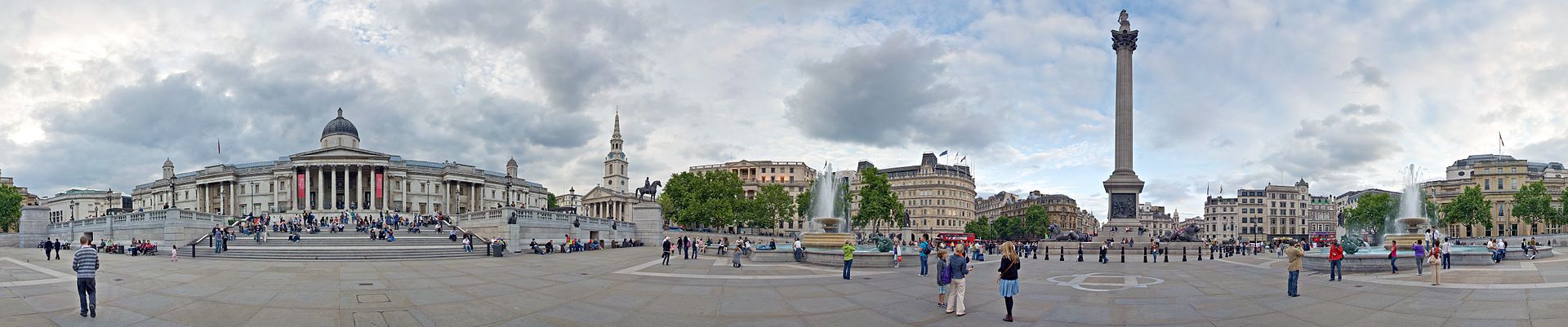
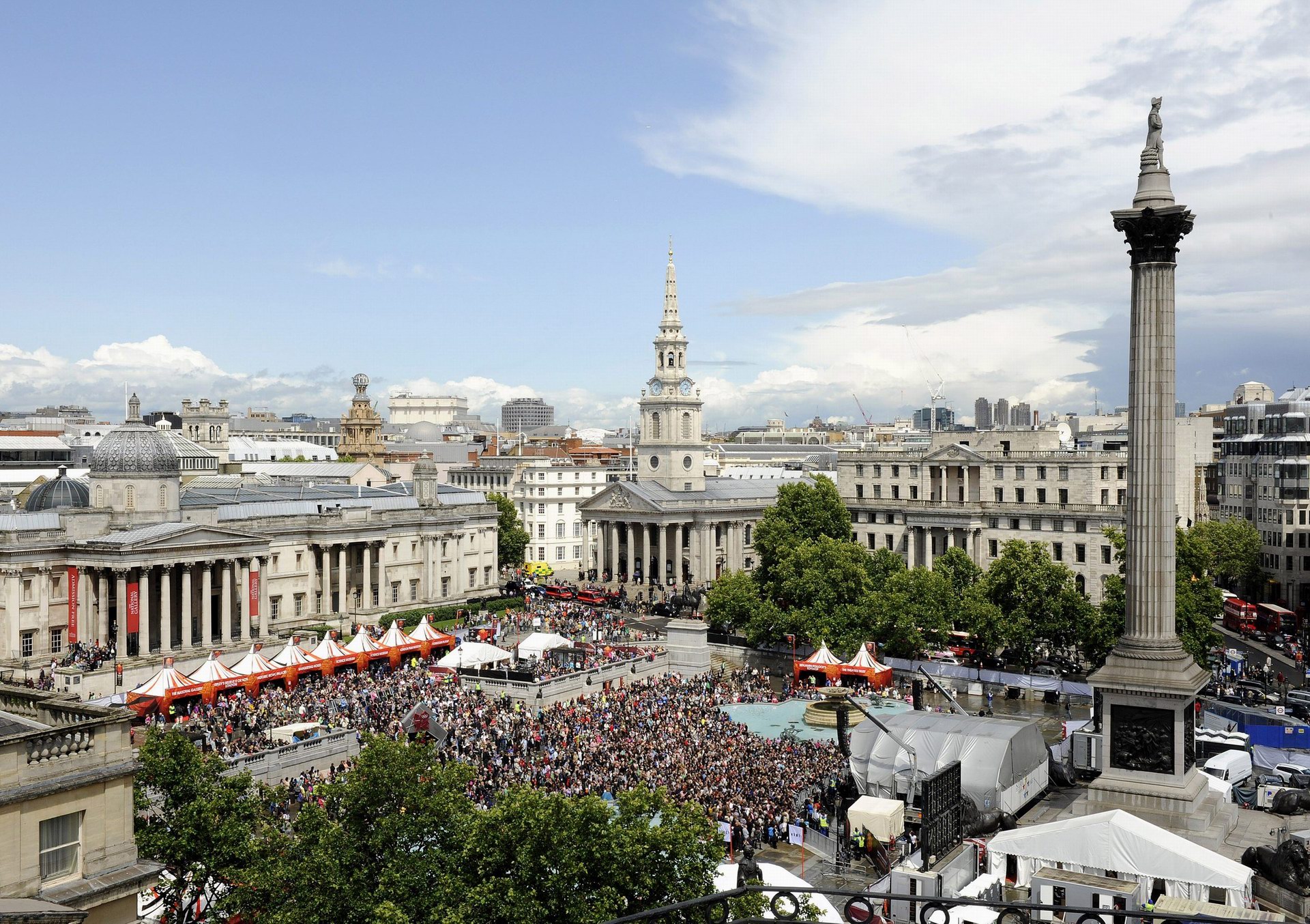
Trafalgar Square is a public space and tourist attraction. The name commemorates the Battle of Trafalgar, a British naval victory of the Napoleonic Wars over France and Spain which took place on 21 October 1805. At its centre is Nelson's Column, which is guarded by four lion statues at its base. There are a number of commemorative statues and sculptures in the square, while one plinth, left empty since it was built in 1840, The Fourth Plinth, has been host to contemporary art since 1999. The square is also used for political demonstrations and community gatherings, such as the celebration of New Year's Eve. Read more >
4. The National Gallery
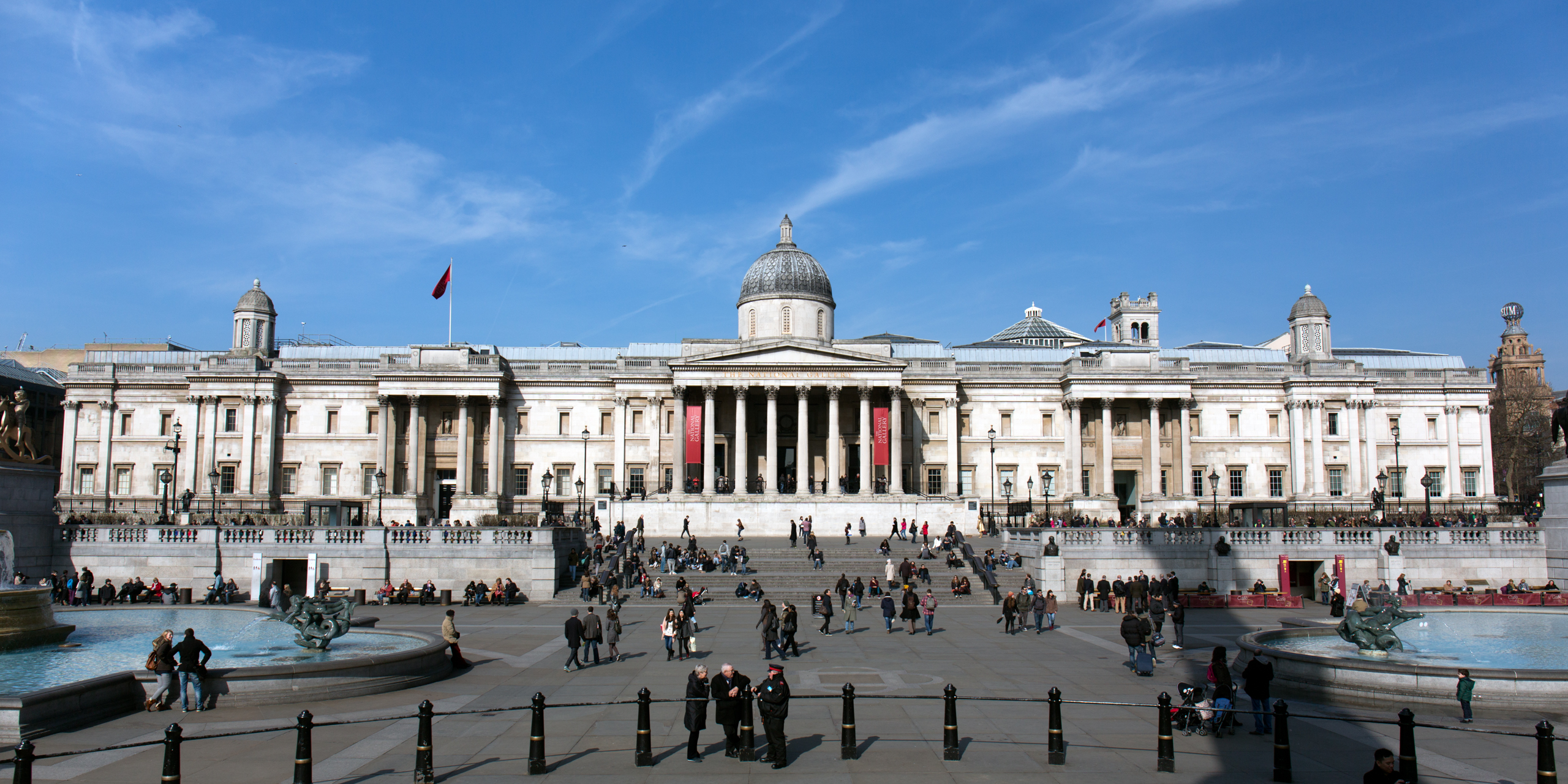
The National Gallery is an art museum. Founded in 1824, it houses a collection of over 2,300 paintings dating from the mid-13th century to 1900. Entry to the main collection is free of charge. Read more >
You can explore the paintings and see what's on at http://www.nationalgallery.org.uk.
5. National Portrait Gallery
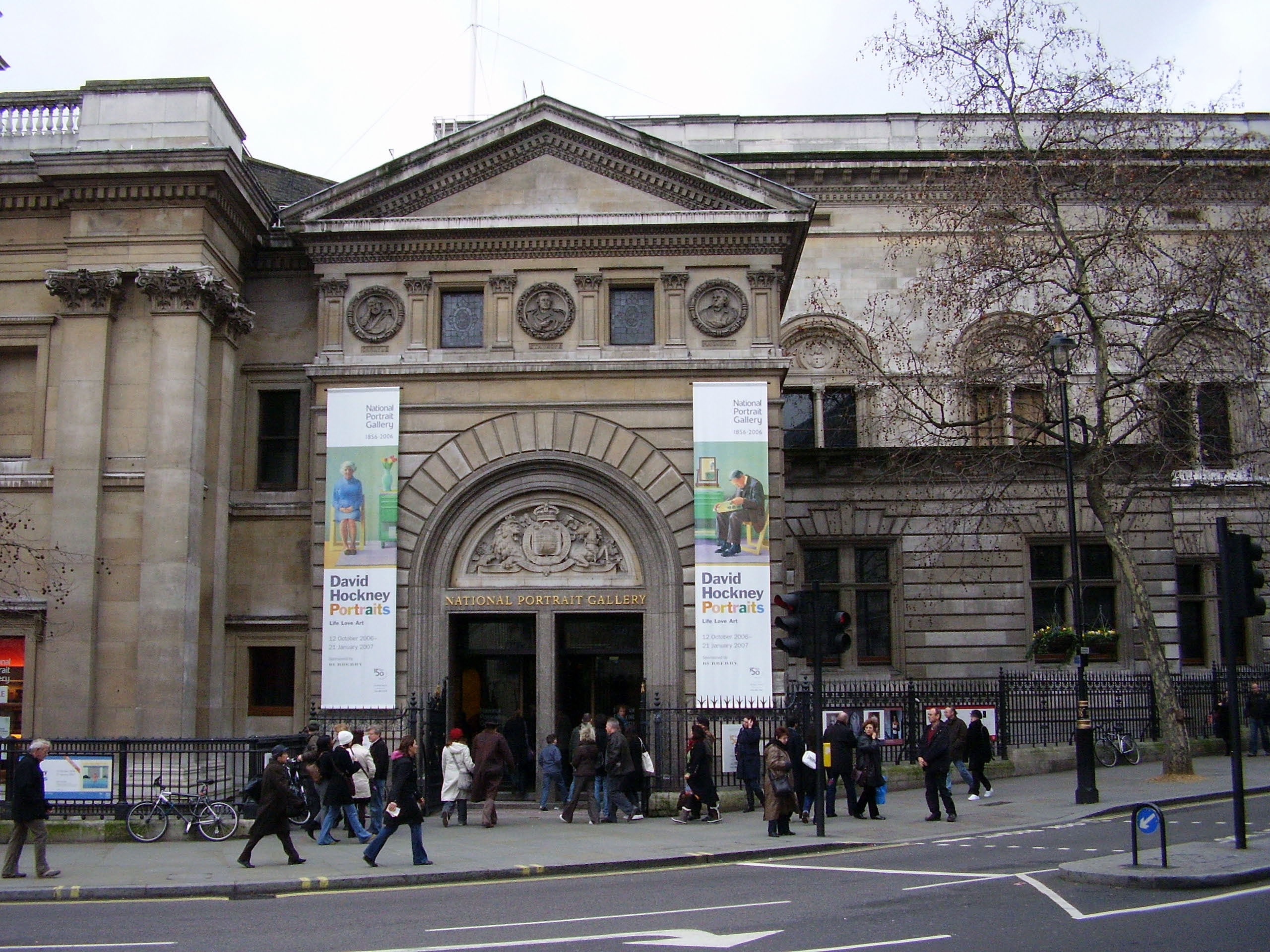
The National Portrait Gallery (NPG) is an art gallery in London housing a collection of portraits of historically important and famous British people. It was the first portrait gallery in the world when it opened in 1856. The gallery moved in 1896 to its current site at St Martin's Place. Read more >
6. Leicester Square
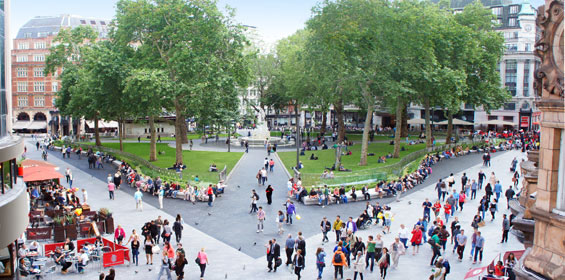
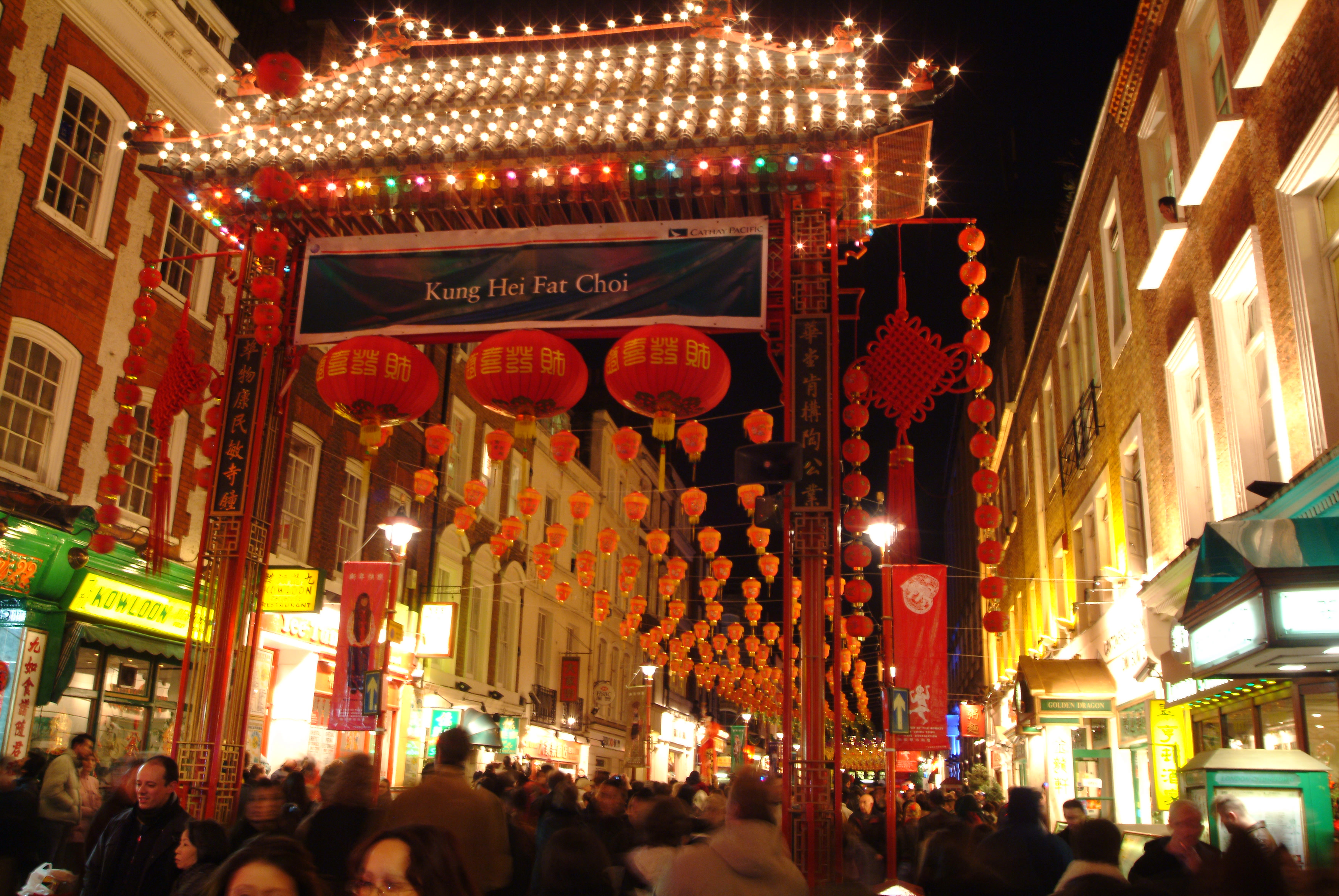
Leicester Square is a pedestrianised square with a little park in its centre. It was laid out in 1670 and has gone numerous restorations, refurbishments and remodelling, the last one being for 2012 London Olympics. The three cinemas in the square often hosts film premières. There are fast food restaurants like Burger King and Pizza Hut, other restaurant chains like Bella Italia and Chiquito, gelaterias like Haagen-Dazs, but more importantly, London's China Town, which offers a great selection of Asian cuisine, is right behind Leicester Square.
7. Covent Garden
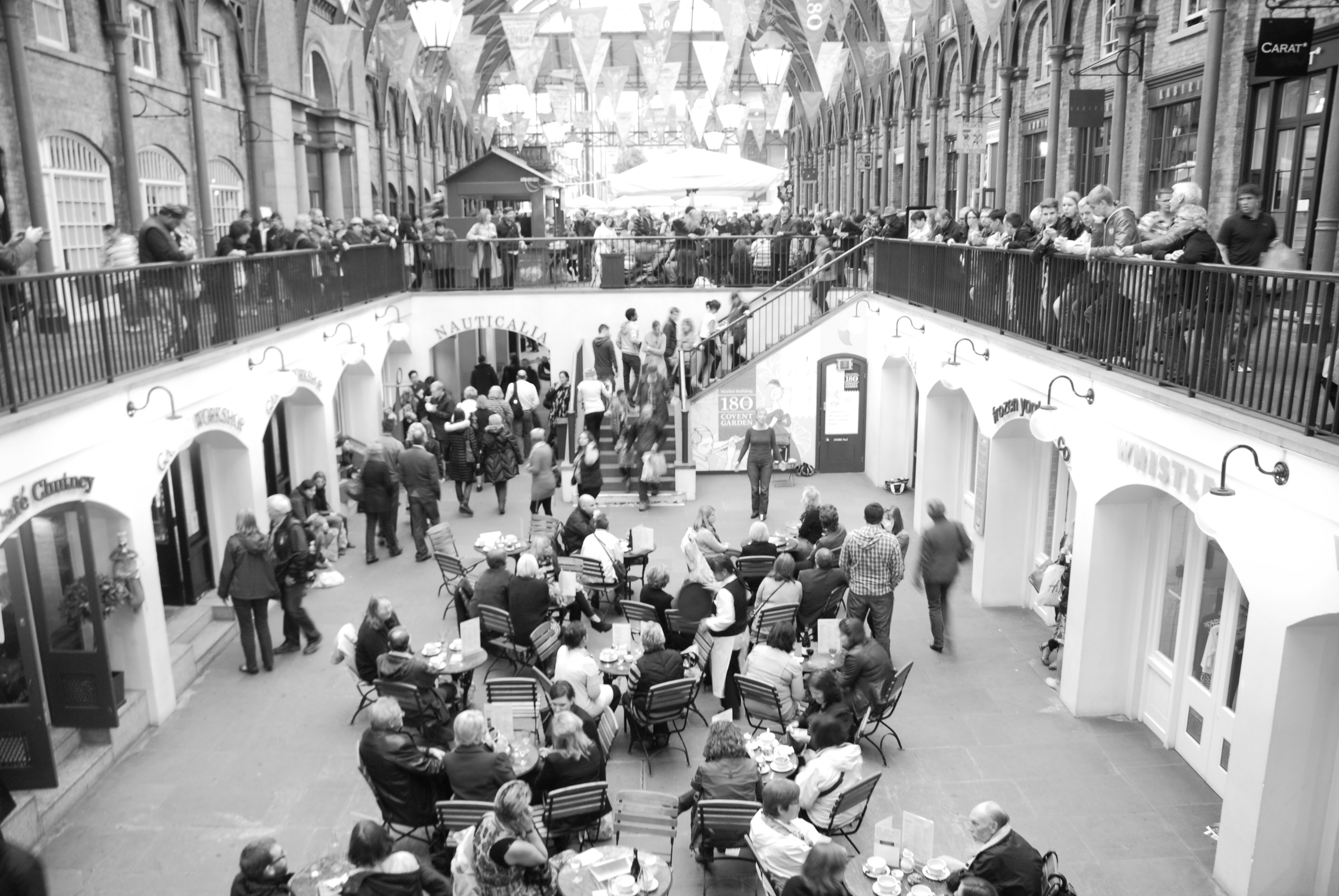
Covent Garden is a popular tourist site with numerous shops, cafes, pubs and restaurants.
Royal Opera House
- Piccadilly Circus
- Regent Street
- Oxford Circus
- All Souls Church (Langham Place)
- Bond Street
- Marble Arch
- Hyde Park (Speaker's Corner)
- Knightsbridge
- Harvey Nichols 5th floor
- Harrods
- Victoria & Albert Museum
- Natural History Museum
- Science Museum
- Royal Albert Hall
- Kensington High Street
10 miles - 16km!
madame tuso
musical / theatre tickets
borough market
portobello road / market / notting hill
http://www.theportobelloartsclub.com/wp-content/uploads/AlicesAssortedAntiquesHDR1.jpg
camden town / market
greenwich