- One experienced person with AI can now build what took a small team ten years ago. I have done it three times in the last few weeks.
- A hundred senior people can build software that used to need thousands.
- That lowers the barrier to every market protected by complex software, starting with ERP.
An hour, then a weekend, then a week
A few weeks ago friends were visiting from Luxembourg. We were choosing something on Netflix, and one of them was looking up the IMDb score of every title on the screen, one at a time. I thought it would be nice to point my phone at the TV and see all the scores at once. So I built it with Claude: ekin.co/imdb. It is one page, it runs on free services, and it took about an hour. It worked on Disney+ too, and my friend got it working on RAI Play. A few years ago that would have been a few days of research and building.
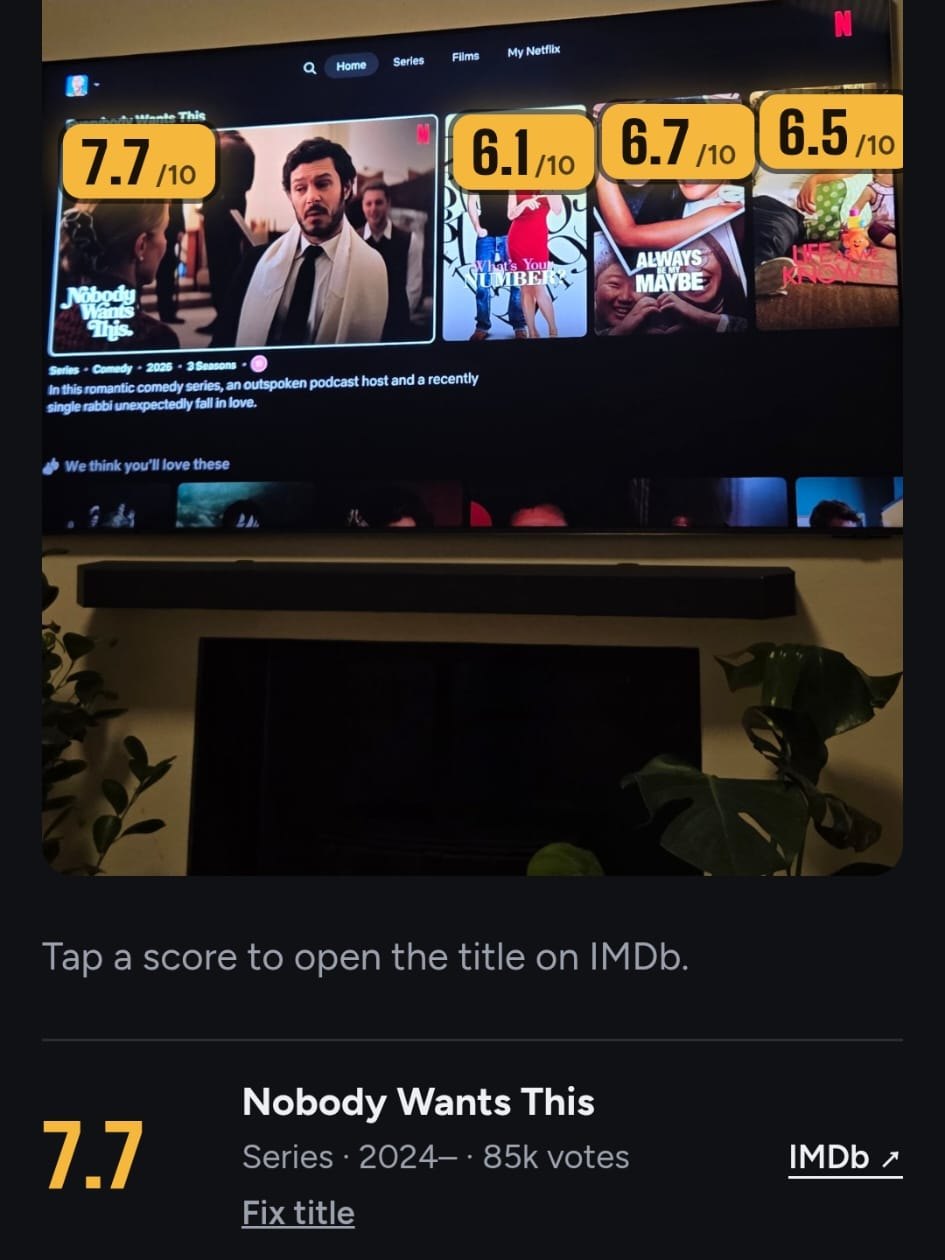 Netflix
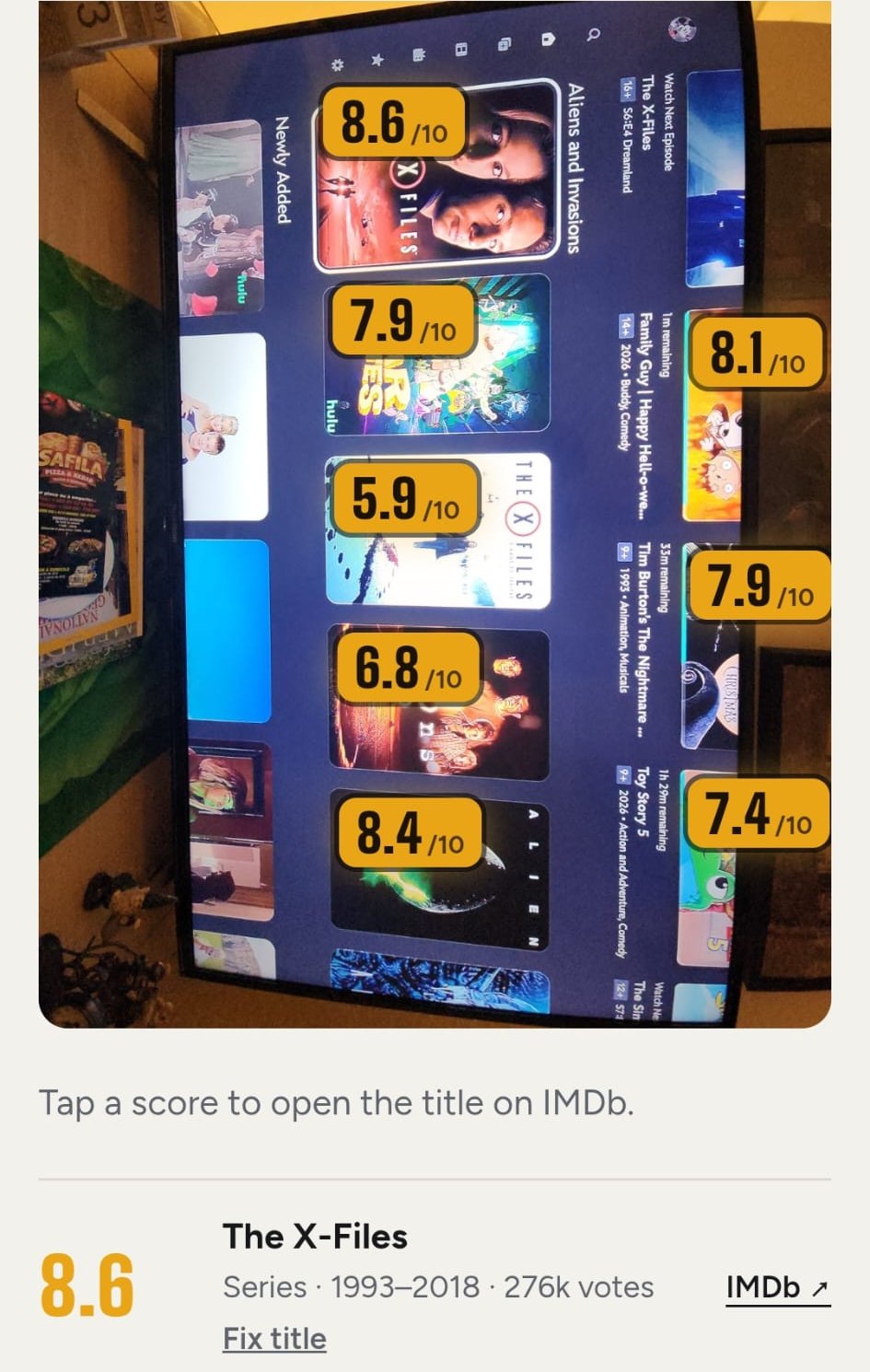 Disney+
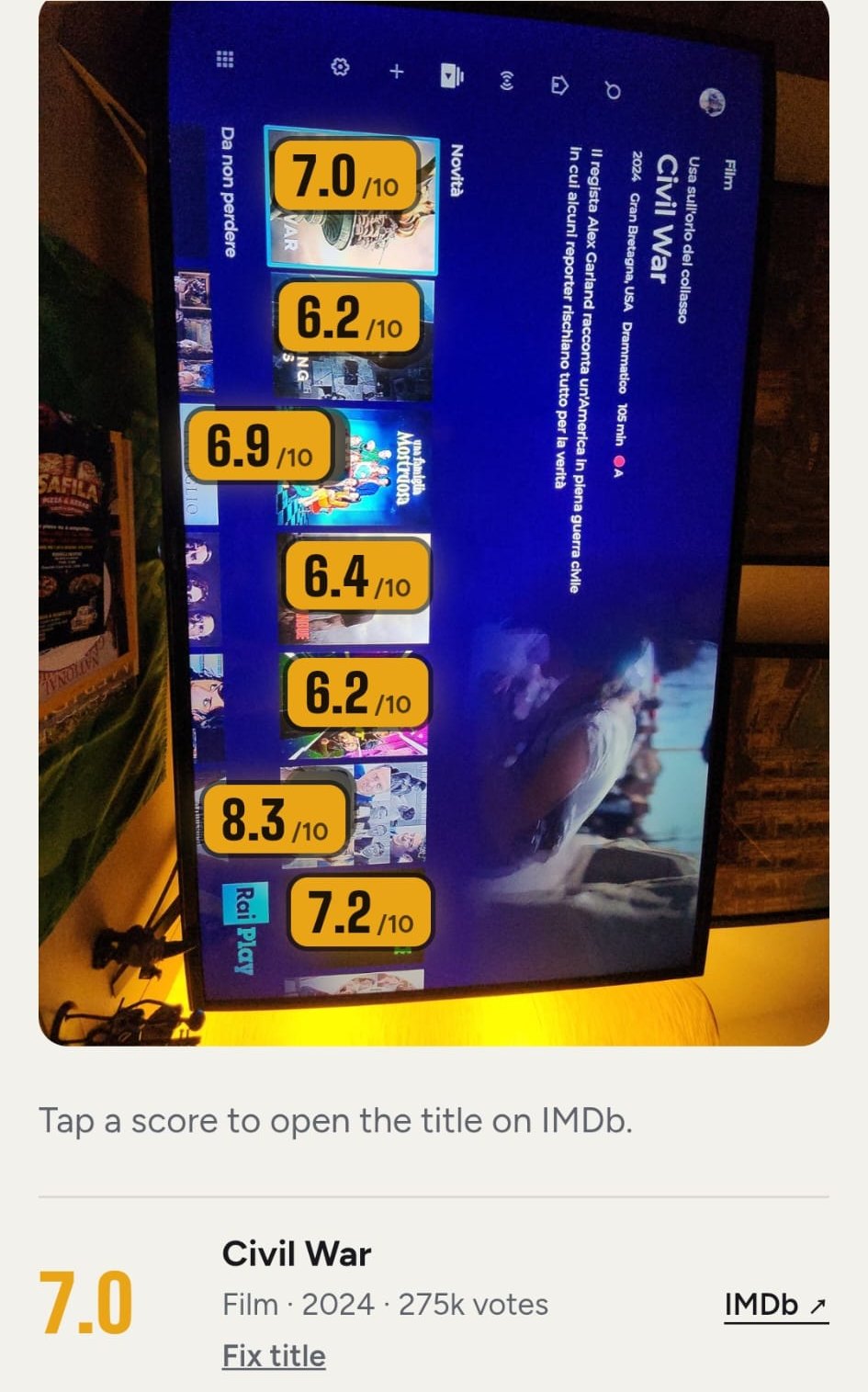 RAI Play
The second one is bigger. I play basketball with friends every week. We film it on a phone, I upload it to YouTube, and somebody watches it back and works out the box score with pen, paper and Excel. Last weekend I built an app to tag the games instead. I shared it with the group on Sunday, the feature requests started coming in, and by Monday night it had more in it than I would ever have planned: basketball.ekin.co.
The features matter less than how they depend on each other. Tag one shot, and the box score, the shot chart, the player’s clips, their season averages and their rating all update. The rating then picks even teams for next week. Hold on to that, because it is the point of this article.
It also has a home page and a three-minute explainer film with AI-generated players and a voiceover.
Ten years ago this was a developer, a designer, a product manager, a web designer/developer, someone for video and a voice artist, working for months. To justify that, they would have had to charge for it or run adverts. I built it for my friends and never thought about money.
The third one is bigger again. It is a commercial product for a client I can’t name yet. They had the front end designed and nothing else. Ten years ago I would have budgeted seven people for at least six months. I expected it to take me three weeks. I built all of it, including the front-end app, and deployed it to the cloud in under a week.
This is not about fewer developers
Whenever someone tells me AI will make software developers redundant, I try to steer the conversation somewhere else. I don’t think the interesting change is fewer developers. I think it is more complex software, built by fewer people than it used to take.
That usually gets a polite nod. People struggle to imagine something a hundred or a thousand times more complex than what they already know. In 1995 Bill Gates tried to explain the internet to David Letterman, and got laughed at. I wrote about that clip last year, and we are in the same position with AI today.
Most people also don’t have a picture of what complexity in software is. So this week I’ll try to give one.
Complexity means interactions, not size
My object orientation professor at university, back in the 1990s, defined complexity as “the number of potential interactions between objects”. I never forgot it.
The basketball app is that definition at work. One tagged shot, and half a dozen other things have to change correctly.
The definition says complexity is not size. A system with ten parts has 45 possible pairs of parts. A system with a hundred parts has 4,950. The parts grow in a straight line and the possible interactions grow much faster. Every one of them is something that can go wrong, and somebody has to think about it, build for it and test it.
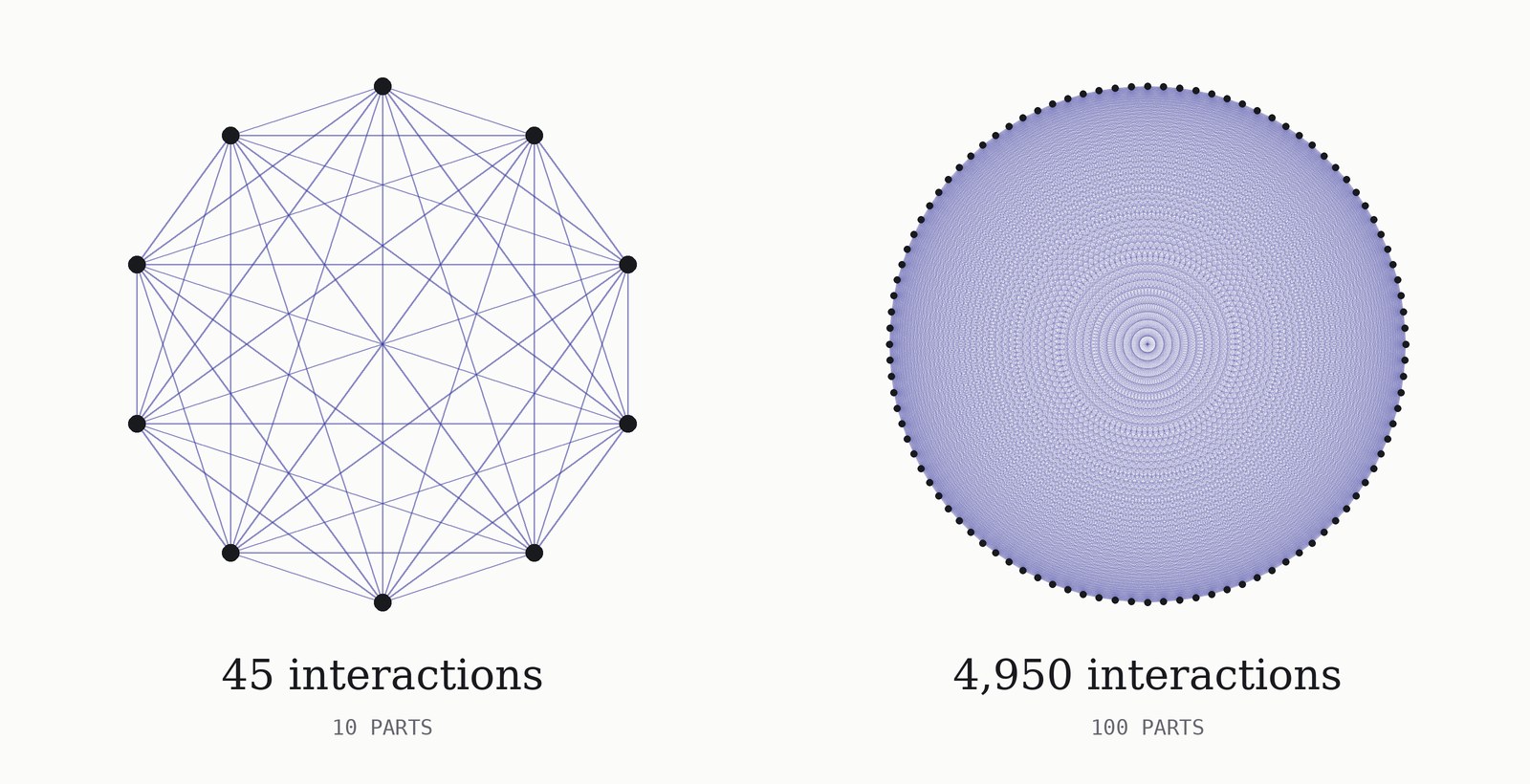
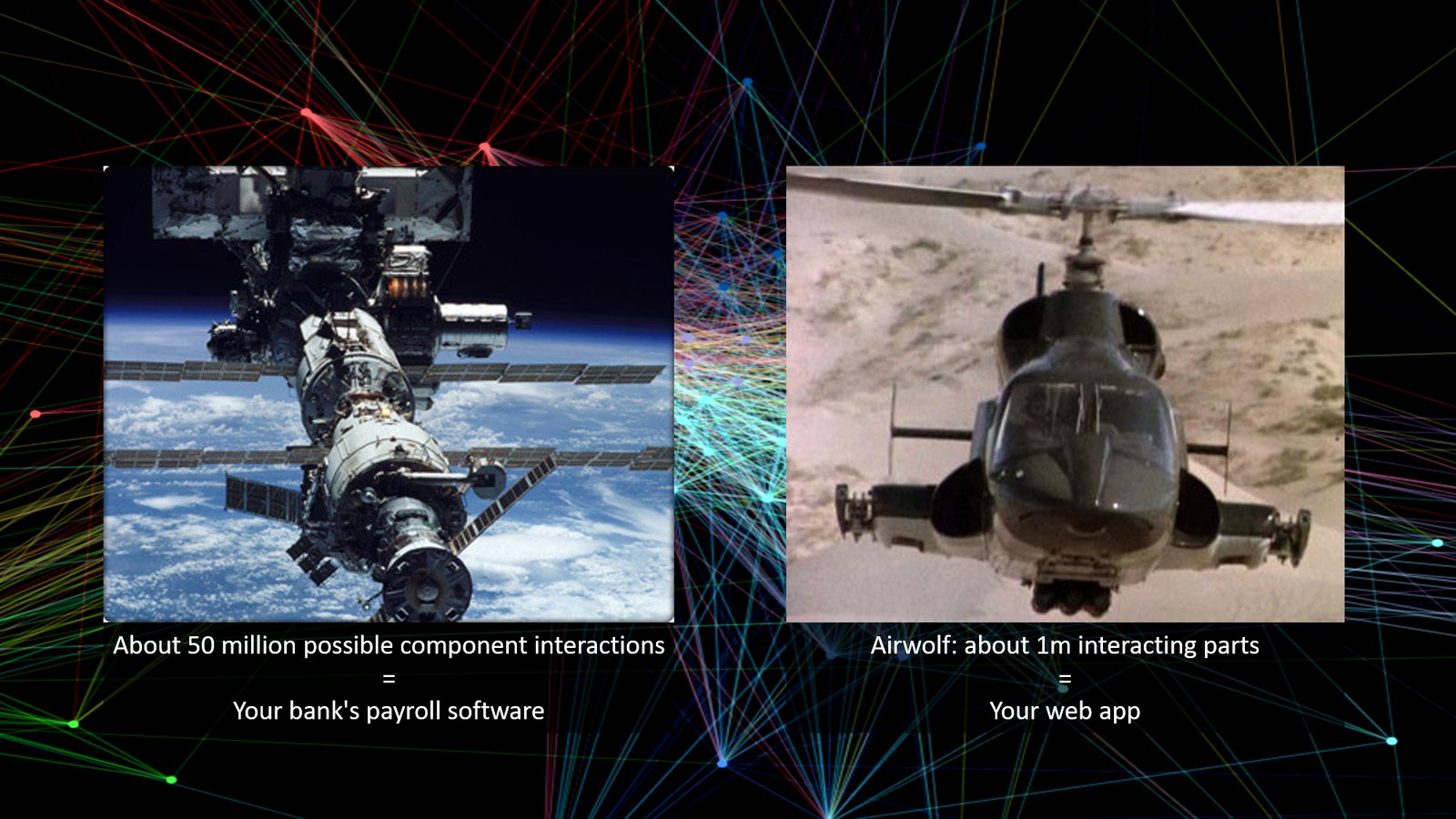
That is why software got expensive. Typing the code was the easy part. Keeping the interactions straight was the hard part, and beyond a certain point no single person could hold them all in their head. So you needed a team.
Complexity used to need an army
Those three projects have one thing in common. I did the work of four or five disciplines, and there was nobody to coordinate with. That second part matters more than it sounds.
Fred Brooks worked this out in 1975, and it is my professor’s definition applied to people. A team of n people has n(n-1)/2 possible lines of communication: 10 for five people, 105 for fifteen. A 2005 study of 564 software projects compared teams of fewer than five with teams of more than twenty. For a project of the same size, the big teams finished about a week sooner and used roughly seven times the effort.
AI raises the amount of complexity one person can handle. And because that person is not a team, the cost of coordinating a team never arrives.
One qualification matters, and it is easy to miss. When people talk about what a developer can do with AI, they are describing what a senior developer can do with AI. I could build these because I already know how to choose the technology, structure the code, set up and secure the cloud infrastructure, design the user experience, judge the interface, and decide which features the product needs and in what order to build them. AI wrote the code and I judged it. Those are the jobs of an architect, a security engineer, a designer, a product manager and a project manager. What I build in a week is really a week plus almost forty years of software development experience. Someone without that experience can see whether the software works. They can’t see whether it is safe, secure or able to scale.
How much faster is this? My rough figure has been thirty times faster, and the third project tells me that is too low. These are my own estimates, not measurements, and the measured evidence is mixed. One careful 2025 trial found experienced developers on mature codebases were slower with AI tools, though the researchers now think that has changed. Everything I describe here was new software, which is the best case.
Jensen Huang made a related point last year. About 150 AI researchers with enough funding behind them, he said, could probably create an OpenAI, because the original OpenAI and DeepMind were about that size. He was talking about what a small team is worth. AI lets a small team reach further.
I keep testing this on myself, and each system I build is bigger than the last. I have not yet found the limit of what one person can do, and I find that fascinating. Now scale it up. If one experienced person can build what used to take a small team, five can build what used to take a department. And a hundred senior people, each experienced across the full stack and each working with their own AI agents, can build software that used to need thousands, or even tens of thousands.
I choose a hundred deliberately. In my experience it is about the largest a company can get while staying simple: some middle management, but no layers and no heavy process. Beyond that, coordination starts to eat the gain.
Challenger banks came first. Challenger ERPs are next.
When the cost of building something complex falls, the barrier to entering that market falls with it. The UK has a recent example.
British banks ran on old, clunky systems, but for years nobody could challenge them, because starting a bank was slow and expensive. In March 2013 the regulators cut the capital and liquidity requirements for new banks and simplified authorisation. Monzo, Starling and Revolut followed, each building its technology from scratch. Monzo now tops the official service-quality survey for current accounts, and Revolut was valued at $115 billion in July.
In banking, regulation lowered the barrier. In software, AI is lowering it.
Take ERP, the software that runs a company’s finances and operations. I pick it on purpose. It is widely thought to be the most complex commercial software there is, and it runs the most critical functions of the largest companies in the world. If the barrier can fall there, it can fall anywhere. SAP has about 112,000 employees, some 38,000 of them in research and development. You once needed an army like that to compete. Now there are challengers. Rillet raised $100 million at a $1 billion valuation two years after it was founded. DualEntry launched with $90 million. Campfire has raised about $100 million. Investors have noticed: SAP’s shares fell more than 16% in one day in January after a weak forecast, in a wider sell-off driven by fear of what AI does to established software companies.
The challenger banks also show how this plays out, and it is slower than the headlines suggest. Revolut started with a currency card and expanded abroad under other banks’ licences. It only received its full UK banking licence this March. It grew by doing the lighter things first and leaving the heaviest obligation until it was big.
Expect the same in ERP. The challengers will start with younger, smaller companies, and the tax rules of a hundred countries will not get simpler because the code got cheaper. Brooks called that essential complexity, and AI doesn’t remove it. What a new entrant can do is choose which complexity to take on, and when. An incumbent has to carry all of it.
Why the big companies can’t simply do the same
The obvious objection is that SAP has AI too. The 2013 rule changes helped only new banks. AI is available to everyone.
It is, but using it is another matter. I have worked in start-ups and inside companies of 100,000 people. Up to about thirty people, a company is simple. At a hundred you get some middle management. Past a few hundred you need layers and defined processes, and from there 2,000 people and 100,000 people are not as different as you would think. The sociologist Peter Blau found the same pattern in 1970: organisations keep adding structure as they grow, but at a slowing rate.
What does change with size is how long it takes to turn. I held senior global roles in companies of that size. I can’t share the stories, but I can state the conclusion: steering 100,000 people is hard, and they move far more slowly than a small, well-organised, well-funded team. Having AI doesn’t change that.
SAP’s chief executive, Christian Klein, has described its own move to the cloud as a classic innovator’s dilemma. Asked on CNBC in May 2023 what AI would do to jobs, he said “we don’t see necessarily a reduction of workforce”, and that revenue would grow faster than headcount. I think that is the right instinct: use the new capacity to build more. The same applies beyond R&D: marketing departments can use AI to go bigger and more complex too. Doing it with 112,000 people is the hard part.
None of this means the incumbents lose tomorrow. They have the customers, the data and the trust, and a large company will not move its ledger to a ten-person supplier overnight. But history is not on their side. Sooner or later every dominant company gets disrupted, so those advantages buy time and not safety. A small, well-organised, well-funded team can now move faster than they can, on products that used to be out of its reach. Building the product is only half of it, though. Those teams will also need AI to create new go-to-market models, because they cannot out-sell an incumbent’s sales force by copying it.
Good for seniors, a problem for juniors
Developers are not becoming redundant. US job postings for software developers are up about 15% since February 2025, while postings overall fell about 7%, and most of the increase is for senior people.
That last part worries me. By mid-2025, employment of developers aged 22 to 25 was nearly 20% below its 2022 peak, while experienced developers held steady. In a trial of mostly junior engineers, those who used AI assistance scored 17% lower on a test of what they had just built. The judgement that makes a senior valuable was learned by doing junior work, and AI now does that work. Employers and universities will have to find another way to teach it.
That fits what I see. The world does not want less software because of AI. Each piece of it needs fewer people, so more of it gets built, by smaller teams, in markets that used to be closed to them.
The biggest change is the one we can’t describe yet. If we could imagine what systems a thousand times more complex would do, we would already be building them. What this revolution will bring is completely new systems that were unimaginable before.
Published 27 November 2026. · Discuss it on LinkedIn · All ideas